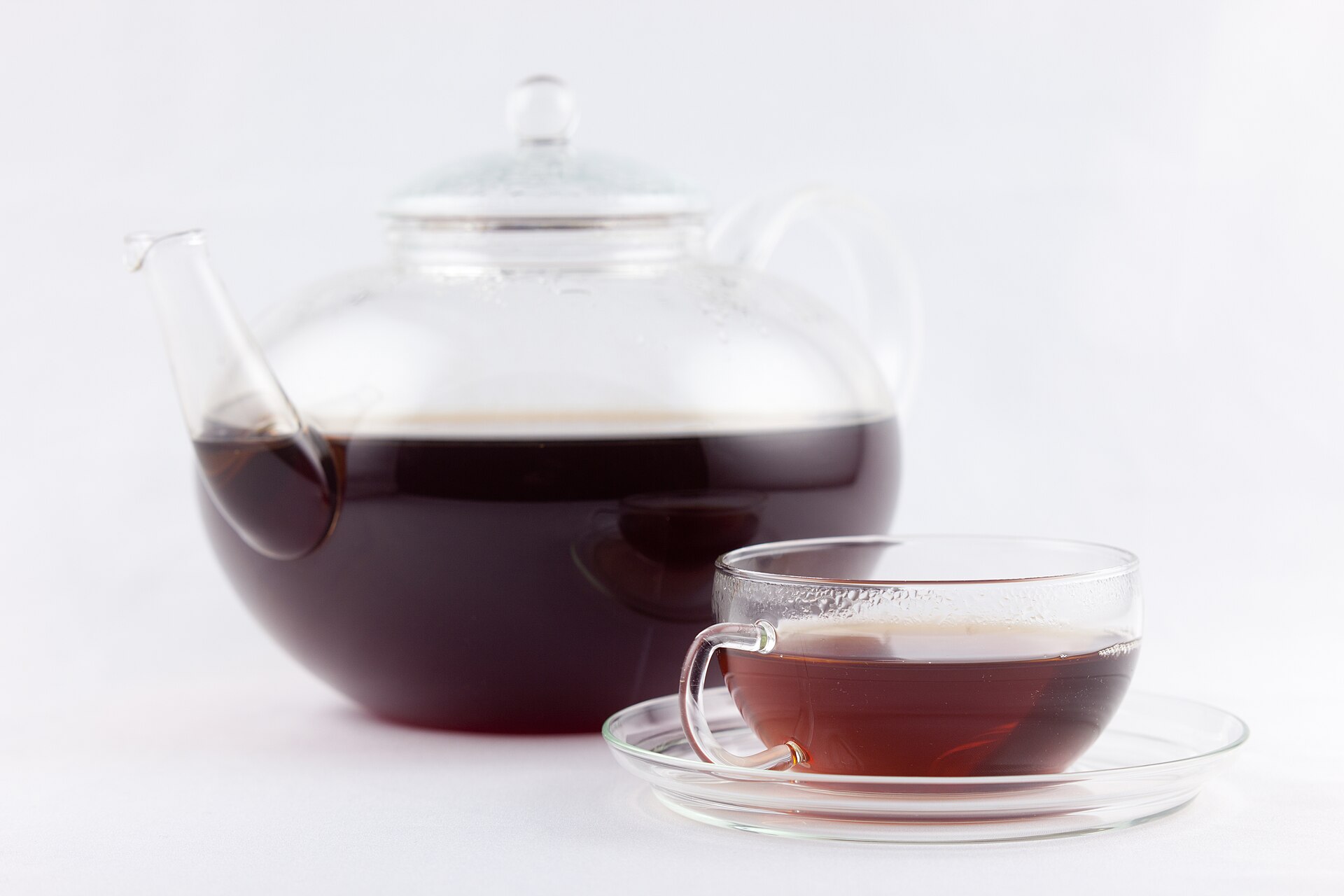
Steep time is one of three dials that decide how tea tastes — alongside water temperature and leaf amount — and it is the easiest one to get wrong because "leave it a bit longer" always feels harmless. It isn't. Most bitter, punishing cups are simply over-steeped.
What steeping actually does
In hot water, different compounds leave the leaf at different speeds. Aromatic, sweet, and savory compounds extract early. Bitter and drying compounds — more of the polyphenols — extract later and keep coming. A short steep gives you flavor without much bite; a long steep trades aroma for harshness. Steeping is not "wait until it's strong"; it is "stop when it's balanced."
Starting times by tea type
These are sensible starting points for Western-style brewing (a mug or pot, roughly 8 oz/240 ml water, one normal teaspoon of leaf). They are not universal rules — leaf size, grade, and your taste all move the number:
| Tea type | Start at | Water temp | Notes |
|---|---|---|---|
| Green tea | 1½–2½ min | 70–80°C | Delicate Japanese greens err short; pan-fired greens can go 3 min |
| White tea | 2–4 min | 75–85°C | Withered leaf extracts slowly; re-steeps well |
| Oolong (ball-rolled) | 2–3 min | 90–95°C | First steep opens the leaf; later steeps get longer |
| Black tea | 3–5 min | 90–100°C | Broken-leaf and teabag grades go faster than whole leaf |
| Herbal (tisanes) | 5–7+ min | 100°C | No polyphenol bitterness to worry about; hard to over-steep |
What moves the time
Leaf size: Whole leaves release flavor slowly; crushed leaves, fannings, and teabag dust release almost instantly. The same tea in teabag form may need barely a minute where loose leaf needs three.
Water temperature: Hotter water extracts faster, so a hotter brew calls for a shorter steep — this is exactly how green tea brewing works: cooler water, shorter time.
Leaf amount: More leaf means faster extraction. The traditional Chinese approach — lots of leaf, very short steeps — produces a different, often richer cup than a Western teaspoon-and-three-minutes.
Your preference: All published times are compromises. Start at the low end, taste, and add time until it is right for you.
Western style versus multiple infusions
Two valid approaches to the same leaf:
Western style: modest leaf, hotter water, one or two longer steeps (the times in the table above). Simple, one big mug.
Multiple short infusions (gongfu-style): generous leaf in a small vessel, and a series of very short steeps — 15–30 seconds each for oolong, lengthening as you go. Each round tastes different: the first steeps are aromatic and light, middle steeps are the fullest, late steeps turn gentle and sweet. Ball-rolled oolongs can give five to eight rounds; green and black teas give fewer. If you have never tried it, it is the single biggest upgrade available without buying new tea.
Cold brew: the exception to everything above
Cold brewing flips the table. Room-temperature or fridge-cold water extracts so slowly that the bitter compounds mostly stay in the leaf, which is why cold-brewed tea tastes smooth and sweet even after hours. The method: 1 tablespoon of leaf per liter of cold water, refrigerate 4–8 hours (overnight is fine), strain, done. Green tea, white tea, and light oolongs are superb this way; it is nearly impossible to over-steep cold brew in a day. The trade-off is patience — and a milder aroma, since the most volatile fragrance compounds need heat to release.
Does longer steeping mean more caffeine?
Somewhat, yes — caffeine extracts quickly and keeps extracting as the steep runs, so a five-minute cup carries more than a one-minute cup from the same leaf. But the bigger lever is the leaf itself. If you want less caffeine, shorter steeps and cooler water do more than switching tea categories. And re-steeped leaves give progressively less caffeine each round — the second infusion of any tea is noticeably gentler than the first.
Fixing the steep
Over-steeped? The bitter compounds are already out — you can't put them back. Dilute with hot water to soften it, and next time cut 30–60 seconds. A timer that starts the moment water hits leaf helps more than willpower.
Under-steeped? Fixable: put the leaves back in for another 30–60 seconds. Thin, flat tea usually just needs more time or more leaf.
Bitter despite short steeps? Time probably isn't your problem — check water temperature and leaf quantity in the bitterness troubleshooting guide.
Teabags: a special case
Everything above assumes loose leaf. Teabag grades are crushed small precisely so they brew fast — a standard bag needs 1–3 minutes, and letting it "soak" indefinitely adds mostly bitterness, not more flavor. If your habit is leaving the bag in the mug, try the experiment: same bag, removed at 2 minutes — the cup is cleaner and you've lost nothing.
Adjust by taste, not by dogma
A useful habit: brew at the short end of the range, taste the cup at the table, and write down (or just remember) what you'd change. Two or three rounds like this and you'll have a steep time that is yours — which is worth more than any chart, including this one.