Every cup of green, black, white, or oolong tea starts the same way: leaves picked from Camellia sinensis, the tea plant. What turns one pile of identical leaves into green tea and another into black tea is a sequence of processing steps — withering, rolling, oxidation, drying — and, crucially, which steps are used and in what order.
Step one: picking
Tea is harvested as a "flush" — the new growth at the tips of the bush. The standard pluck is the bud plus the top two leaves; finer teas take bud-only or bud-and-one-leaf, while coarser grades take more mature leaf. Picking is still often done by hand for quality teas because hands select what machines can't: the same young, tender flush every time. Harvest timing matters too — early spring flushes are prized for sweetness and delicacy.
Step two: withering
Fresh leaves are about three-quarters water. Spread out on trays or racks — for hours, in air or sun — they lose moisture and go limp and leathery, making them pliable enough to roll without crumbling. Withering isn't just drying; it also starts chemical changes that build aroma. White tea is essentially withered and dried and little more — this step does most of its work.
Step three: bruising and rolling
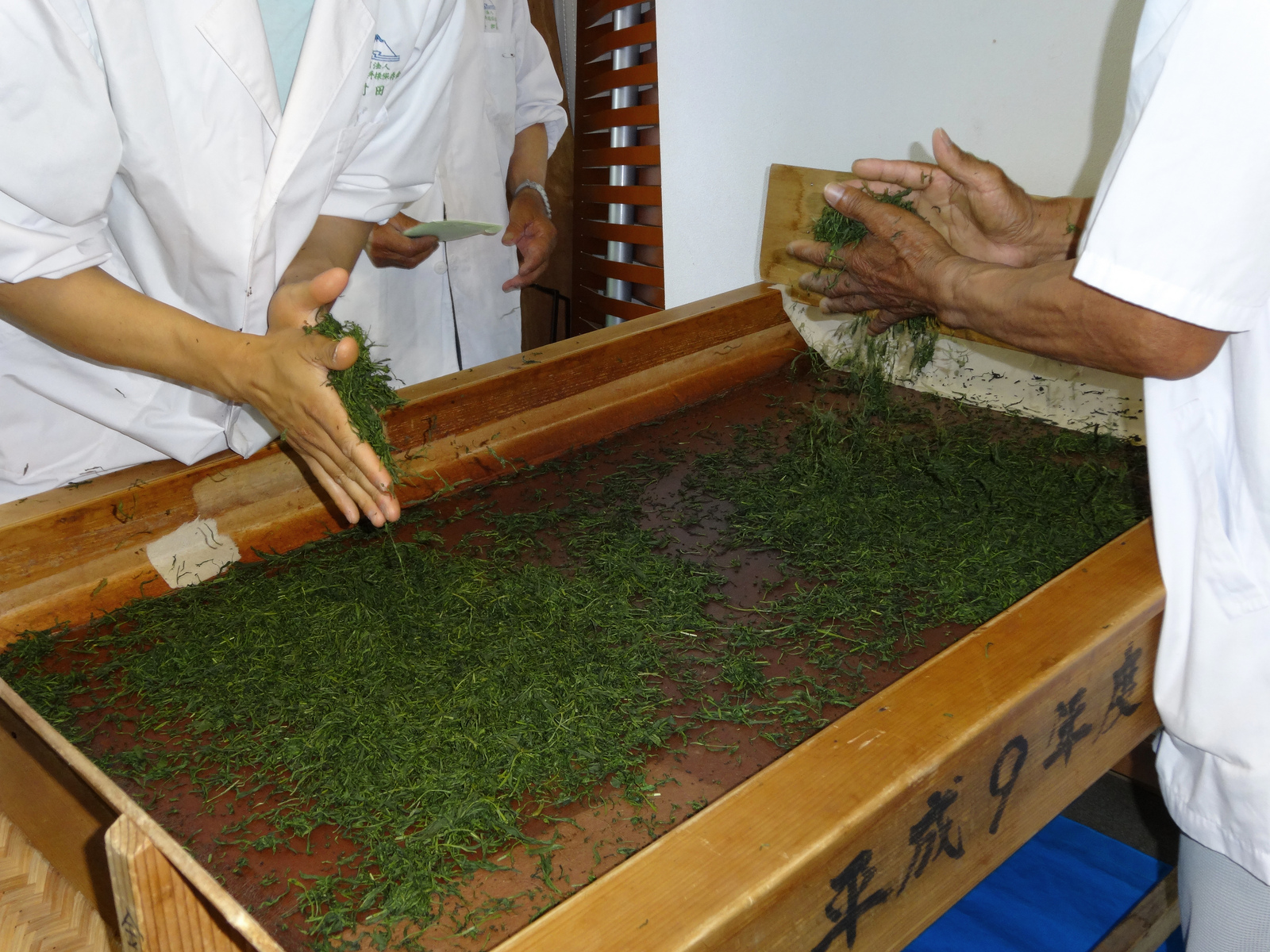
The withered leaves are rolled, twisted, or shaken — by hand in cloth bundles for ball-rolled oolongs, by machine rollers elsewhere. Rolling does two jobs: it breaks cell walls so juices coat the leaf surface (which is what enables oxidation to proceed and what later dissolves into your cup), and it shapes the leaf — flat spears for Dragon Well, tight pellets for Tieguanyin, twisted strips for rock teas.
Step four: oxidation — the step that decides the category
Once the leaf's insides meet air, enzymes begin converting its compounds into new substances that darken the leaf and deepen the flavor — the process covered in detail in what oxidation means. Whether this step happens at all, and how far it runs, is the master switch of tea classification:
- Green tea: oxidation is prevented — heat is applied right after picking (steaming in Japan, pan-firing in China) to destroy the enzymes before they can act.
- White tea: minimal intervention — just wither and dry; only slight incidental oxidation.
- Oolong: oxidation is encouraged then stopped partway — anywhere from ~10% to ~70% depending on the style.
- Black tea: oxidation runs essentially to completion before drying.
Step five: heat — stop or set
To stop oxidation at a chosen point, or to kill it before it starts, producers apply heat: a hot wok toss, a steam blast, or oven roasting. Chinese greens are pan-fired (toasty, nutty results); Japanese greens are steamed (vivid, marine, very "green"). For black tea, the equivalent step happens after full oxidation.
Step six: drying and finishing
Final drying reduces moisture to shelf-stable levels — typically a few percent — and sets the flavor. Some teas get finishing treatments after drying: charcoal roasting for traditional oolongs, scenting with jasmine blossoms, or aging for puerh-style teas. Then the leaf is sorted by size and grade, and packed.
Sorting, grading, and what "handmade" means
After drying, the batch is sorted — sieves and often hand-picking separate whole leaves from broken pieces and dust. This is where commercial grades come from: the fine whole-leaf top sorts are sold as loose leaf; the smaller broken grades and fannings feed the teabag market. The same day's pluck from the same bushes therefore ends up at wildly different price points — which is why "whole leaf" on a package is real information, not marketing.
"Handmade" on a label similarly means something specific: the rolling, shaping, or firing was done by hand rather than machine. It can mean more careful handling — a skilled maker adjusts on the fly — but it doesn't automatically mean better. A well-run machine produces more consistent tea than an unskilled hand; what you're paying for with genuinely handmade tea is small-batch attention, not a magic adjective.
One category breaks the table above deliberately: puerh and other "dark" teas add microbial fermentation — real microbe-driven change, often over years — which is a different process from oxidation (the distinction matters enough that the oxidation article covers it directly).
Why the same leaf becomes four different teas
| Type | Wither | Bruise/roll | Oxidation | Heat to stop | Dry |
|---|---|---|---|---|---|
| Green | Brief | Yes (shaping) | Prevented | Early — first step | Yes |
| White | Long, slow | No/minimal | Slight, incidental | Gentle or none | Yes |
| Oolong | Yes | Yes (bruise edges) | Partial, controlled | At chosen point | Yes (+roast) |
| Black | Yes | Yes (macerate) | Full | After oxidation | Yes |
Read the table vertically and the whole taxonomy snaps into place: green tea is the one where heat comes first, black is the one where oxidation runs its course, and oolong lives at every point in between.
What this means for your cup
Processing is flavor. The vegetal bite of green tea, the malt of black tea, and the floral-mineral range of oolong are all downstream of this sequence — which is why green versus black is really a processing question, and why the different colors of leaf and liquor trace back to the same fork. When a tin tells you a region and style, it's describing a specific version of this table — and now you can read it.