Oxidation is the single most important concept in tea — it's the variable that decides whether a leaf becomes green, oolong, or black. Yet it's widely misunderstood, confused with fermentation, and blamed for things that are actually just brewing. Here's what it actually is, in plain terms.
What oxidation is
Inside a tea leaf are enzymes and a family of compounds called polyphenols. While the leaf is intact on the bush, they sit in separate compartments. When the leaf is bruised, rolled, or cut, those compartments break open; the enzymes and polyphenols mix, meet oxygen, and begin a chain of reactions. The leaf darkens, and the flavor compounds transform — grassy turns malty, sharp turns fruity, green turns copper.
Cut an apple and leave it on the counter: the browned flesh an hour later is the same class of chemistry. So is the color of black tea versus green — one deliberately browned, one kept pale.
What oxidation is not
It is not fermentation. This is the most common confusion in tea vocabulary. True fermentation involves microbes — yeast, bacteria — doing the work, as in beer, kimchi, or puerh tea. Oxidation is enzymatic chemistry driven by the leaf's own enzymes and air, no microbes involved. When old books call black tea "fermented tea," they mean oxidized — the vocabulary stuck and causes confusion to this day. Only post-fermented teas like puerh genuinely ferment.
It is not what happens in your tin. Stale green tea that turned brown wasn't "oxidized" in the processing sense — that's slow degradation of compounds, a quality problem, not a controlled step. See signs of tea gone bad for that scenario.
How producers control it
Oxidation is steered with three levers:
Starting it: Bruising — shaking leaves in baskets, tumbling, or machine rolling — breaks cell walls and starts the reaction. More bruising means faster, deeper oxidation.
Steering it: Time, temperature, and humidity in the oxidation room determine how far it runs. Producers monitor by smell — the aroma progression from fresh-cut grass through floral to fruity tells an experienced maker exactly where the leaf is.
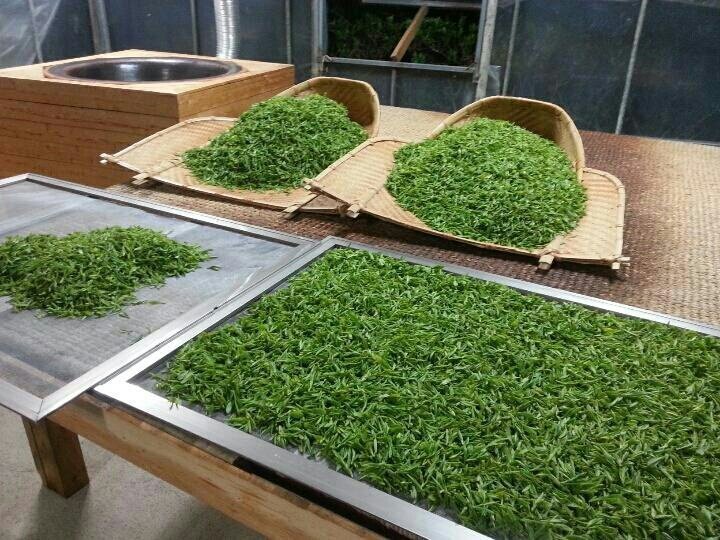
Stopping it: Heat. Applying heat at the right moment destroys the enzymes and freezes the oxidation level where the maker wants it — which is what separates a 20% oolong from a 90% black.
What it changes in the cup
| Oxidation level | Tea style | Liquor | Flavor direction |
|---|---|---|---|
| ~0–5% | Green, white | Pale yellow to green | Fresh, vegetal, brisk, sometimes marine |
| ~10–30% | Light oolong | Pale gold | Floral, creamy, fresh-fruity |
| ~40–70% | Dark oolong | Amber | Honeyed, fruity, rounded |
| ~80–100% | Black | Copper to reddish-brown | Malty, brisk, fruity, deep |
The chemical driver is simple to remember: the same polyphenols that make green tea taste sharp and brisk are converted by oxidation into thearubigins and theaflavins — the compounds that make black tea dark and malty. More conversion, deeper cup.
Oxidation and the tea categories
Every named tea type is essentially an oxidation setting: green versus black is the two ends of the dial, and oolong is every stop in between. Once this clicks, the whole tea shelf becomes readable — a "lightly oxidized" label tells you to expect green-adjacent flavors before you even open the tin.
You can see oxidation on the leaf
Next time you brew a ball-rolled oolong, unfurl a spent leaf and look closely: the edges are browned while the center stays green. That's partial oxidation made visible — the bruised rim reacted, the protected middle didn't. It's a direct photo of the process. Whole leaves of black tea show the end state — uniformly dark — and green tea the start state: heated before the edges could turn. Once you know what you're looking at, leaf inspection becomes a small forensic tool: uneven browning on what's sold as green tea suggests sloppy handling; a pale liquor from dark leaf suggests a brew that's too short or cool.
What oxidation means for taste — and for caffeine myths
Flavor is the real change: unoxidized leaf keeps its sharp, fresh, vegetal compounds; oxidation converts them into smoother, deeper, fruitier and maltier ones. What oxidation does not do is remove caffeine — the idea that "black tea is stronger because it's oxidized" is wrong in both directions; the leaf had the caffeine all along, and category barely predicts the cup's level (see the comparison for what actually moves caffeine).
Two common misunderstandings
"Oxidized tea is stale tea." No — oxidation in the factory is controlled and desirable; it's what makes black tea black. Slow air exposure in your cupboard is a different, uncontrolled process that degrades any tea.
"Green tea has no oxidation." Nearly true and worth the precision: it is prevented early by heat, which is why green tea tastes like fresh leaf. A tiny incidental amount happens during handling — which is why "unoxidized" is the better word than "non-oxidized."