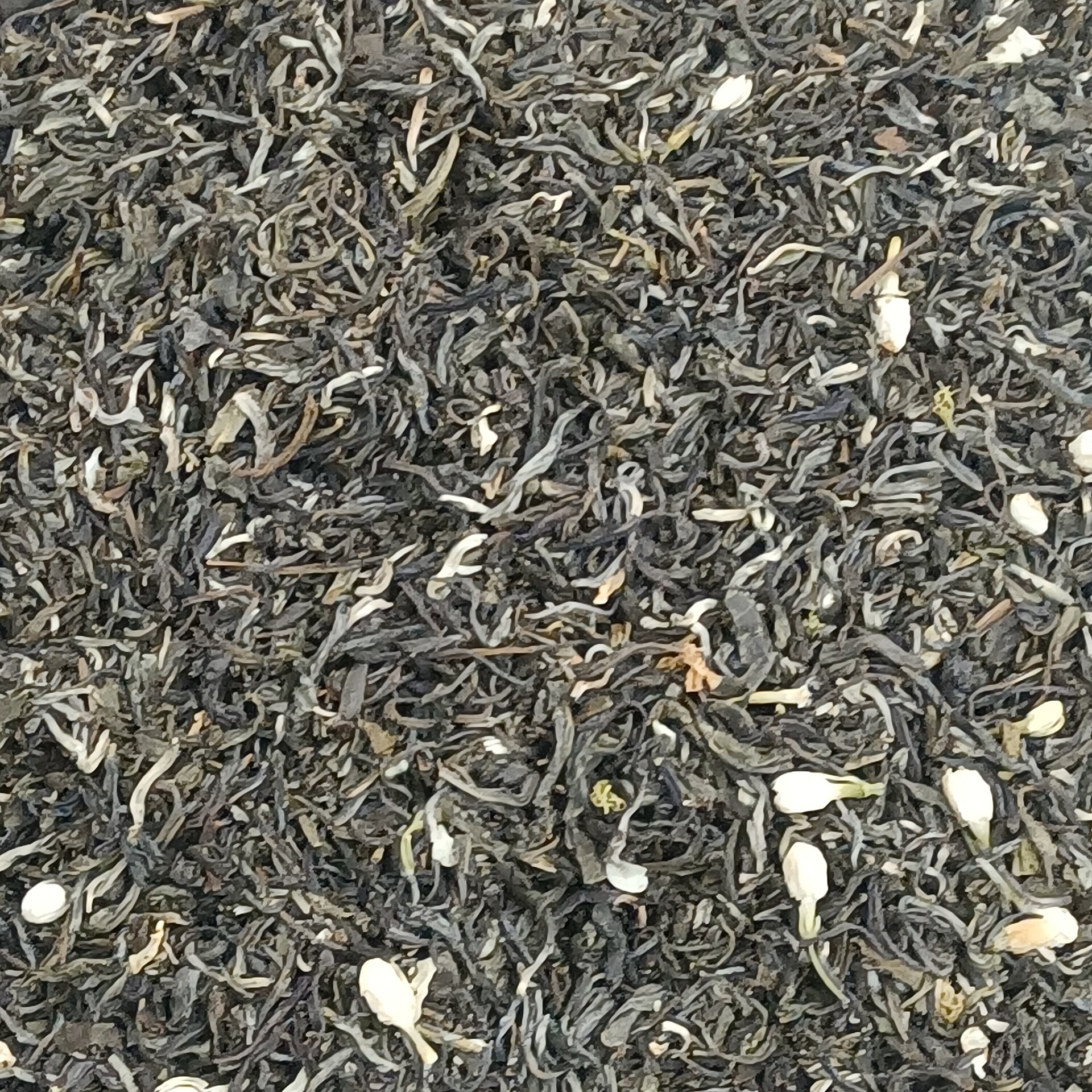
A cup of good tea can smell unmistakably like lilac, orchid, osmanthus, or jasmine — and in a quality tea, no flowers were ever added. The floral notes are produced by the leaf itself: by the cultivar it grew from, the conditions it grew in, and what processing did to its aromatic compounds. Understanding where they come from also teaches you how to find them — and how not to be fooled.
Floral as a sensory description
"Floral" is a description, not an ingredient list. When tasters write "orchid" or "lilac" for a tea, they mean the volatile aromatic molecules in the cup happen to resemble the ones those flowers produce — often literally the same molecules. Tea contains hundreds of aroma compounds; a few, like linalool and geraniol, appear in both flowers and tea leaves, which is why a high-mountain oolong can smell genuinely like a bouquet.
Two different sensory routes deliver the same perception: aroma — what you smell from the dry leaf and the rising steam — and retronasal flavor — the aromatics that reach your nose from inside your mouth as you swallow. Great floral teas deliver both: the empty cup keeps its perfume minutes after the last sip.
Where floral notes actually come from
Cultivar: Some tea plant varieties are genetically biased toward floral compounds — this is why Phoenix dancong oolongs can be bred into named "fragrances" like almond, orchid, or honey, with no flavoring involved.
Growing conditions: Cool, high-altitude, misty environments slow growth and concentrate aroma — the reason Taiwanese high-mountain teas carry their signature lilac-cream perfume.
Processing: Controlled withering and bruising develop aroma compounds; light oxidation preserves them. This is why floral notes live mostly in lightly oxidized oolongs, delicate white teas, and some greens — and why heavy roasting or deep oxidation pushes a tea toward fruity, malty, or toasty instead.
Brewing: Aroma compounds are volatile — literally. Water that's too hot or a lid left off the pot lets them escape before you smell them; slightly cooler water and a covered steep keep the perfume in the cup.
Teas that are naturally floral
- Light oolongs: Alishan, Lishan, green-style Tieguanyin — lilac, orchid, creamy florals. See the oolong guide for the style range.
- Phoenix dancong: single-bush oolongs famous for intense natural fruit-and-flower character.
- White teas: Silver Needle's soft hay-and-honey florals.
- Some greens: fine pan-fired greens can carry a light orchid edge.
Natural versus scented versus flavored
Three very different products can all taste "floral":
- Naturally floral tea: the leaf produces the aroma. Expensive to make, subtle in the cup — the perfume survives several steeps and stays in the empty cup.
- Scented tea: real flowers are layered with tea so the leaf absorbs their aroma — jasmine green tea is the famous example. Legitimate tradition; the label should say it (jasmine, rose, osmanthus).
- Flavored tea: added flavoring — natural or artificial. Usually obvious: a loud, one-note smell in the dry leaf that collapses after the first steep.
A quick field test: naturally floral tea smells floral in the liquor and the empty cup, not just the dry leaf; flavored tea smells strongest in the bag.
How to find the notes — a beginner's method
You don't need a trained nose, just a repeatable routine:
- Warm the vessel: rinse a small pot or gaiwan with hot water, add the dry leaf, lid on for ten seconds, then smell — warmed dry leaf shows its loudest aromatics.
- Smell the lid: after the first steep, the underside of a gaiwan or pot lid concentrates the aroma.
- Slurp: drawing the tea across your palate with air spreads the volatiles where your nose can actually reach them.
- Smell the empty cup: the "cup-bottom fragrance" (bei di xiang) is the professional's check — good floral tea leaves perfume behind.
- Describe, don't grade: "reminds me of lilac" is a better note than "nice." Comparing two teas side by side makes differences obvious that are invisible solo.
Brewing to keep the flowers in the cup
Delicate floral aromatics are the first thing careless brewing loses. A covered steep holds them; a slightly cooler temperature (80–85°C for light oolongs rather than a hard boil) releases them without flattening; and short repeated steeps reveal more layers than one long extraction. Pre-warming the cup itself matters more than people expect — a cold cup drops the liquor temperature instantly and kills the aroma release.
If your floral tea doesn't taste floral
Check the usual suspects: water too hot scalding the aromatics, a stale tin that lost its top notes (see freshness signs), hard water flattening the cup, or simply a flavored tea whose loudness faded. And remember that "floral" is a direction, not a promise — what one taster calls orchid another calls sweet grass, and both can be right.