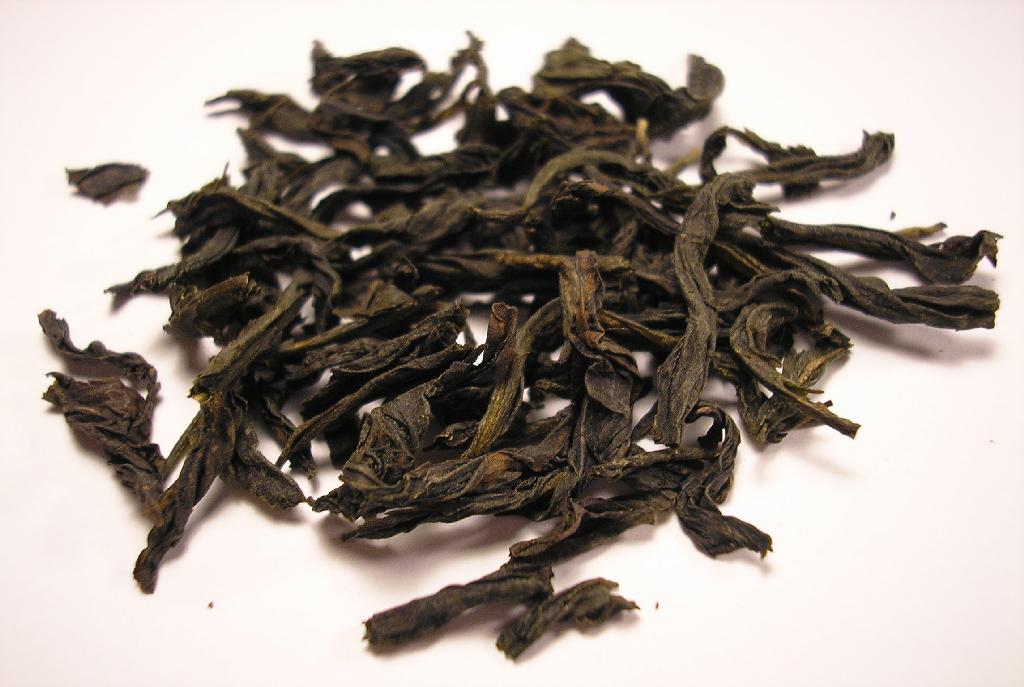
Oolong is the tea category that lives between green and black. Green tea is barely oxidized, black tea is fully oxidized, and oolong is deliberately stopped somewhere in the middle — which is why no single description of "oolong flavor" exists. A lightly oxidized oolong can taste closer to green tea; a heavily oxidized or roasted one can drink almost like black tea.
Partial oxidation, explained simply
After picking, oolong leaves are bruised — shaken or tumbled — so their edges start to oxidize, while the leaf centers stay greener. Producers then apply heat at a chosen point to stop the process. Where that point lands — 10%, 40%, 70% — is a craft decision that shapes the whole character of the tea. You may even see the signature under a microscope of the leaf itself: green middles with browned, oxidized rims.
This is the key to understanding the category: oolong is not one flavor, it is a range.
The three styles you'll actually meet
Lightly oxidized (roughly 10–30%): Fresh, floral, and creamy. Famous examples are Taiwan's high mountain teas and Anxi Tieguanyin in its modern "green" style. The leaves are rolled into tight ball shapes that unfurl into whole leaves as they steep. Brewed light, these taste like lilac, orchid, and warm milk.
Heavily oxidized (roughly 40–70%): Amber, fruity, and honeyed. Oriental Beauty is the classic example — notes of muscat grape and honey. These brew copper-colored and rounder, closer to a delicate black tea.
Roasted (any oxidation + post-roast): Traditional-style Tieguanyin and Wuyi "rock" teas are finished over charcoal or with repeated oven roasting. The result smells and tastes toasted — minerals, dried fruit, wood, caramel. A dark roasted oolong is the most coffee-adjacent tea there is.
Ball-rolled versus strip-style
Oolong leaves come in two physical formats. Ball-rolled oolongs — most Taiwanese teas and Tieguanyin — are wrapped and pressed until each leaf curls into a tight pebble; the pellets unfurl into whole leaves over several steeps. Strip-style oolongs — Wuyi rock teas and Phoenix dancong — are left as long, twisted leaves. The shape tells you nothing about quality, but it does hint at brewing: ball-rolled leaf needs a first steep just to open up, while strip leaf gives flavor fast.
What oolong tastes like
Common tasting words you will meet: floral (lilac, orchid, osmanthus), fruity (peach, apricot, muscat grape), creamy (a soft, milk-like texture in high mountain styles), mineral (the stony, "rock rhyme" character of Wuyi teas), and roasted (toast, caramel, dried longan). None of these comes from added flavoring in a quality tea — they are the leaf's own compounds, developed by oxidation and roast. That said, scented and flavored oolongs exist too; if a tea smells like perfume in the tin, check the ingredient list.
How oolong differs from green and black tea
| Green | Oolong | Black | |
|---|---|---|---|
| Oxidation | ~0–5% | ~10–70% | ~80–100% |
| Leaf shape | Needles, curls, flat | Ball-rolled or strip-style | Broken or whole leaf |
| Liquor | Yellow-green | Pale gold to deep amber | Copper to reddish brown |
| Flavor center | Vegetal, brisk | Floral → fruity → roasted | Malty, brisk, fruity |
| Re-steeping | 2–3 decent cups | Often 5–8+ cups | Usually 1–2 cups |
The re-steeping row is oolong's quiet superpower. Ball-rolled oolongs are made to be brewed repeatedly; each short steep opens the leaf further and shows a different facet. One serving of leaves can easily carry an afternoon.
Is oolong caffeinated?
Yes — all true tea contains caffeine, and oolong is no exception. Where it lands depends on the same variables as every tea: leaf grade, amount used, water temperature, and steep time. In practice, a gently brewed cup typically falls in the same moderate band as green and black tea. The bigger lever is your brewing, not the category label.
A practical first brew
Two ways work well:
Casual mug method: about 1 heaped teaspoon of ball-rolled oolong per 8 oz of water at 90–95°C (194–203°F), steep 2–3 minutes. Resteep the same leaves with +30–60 seconds each round.
Gongfu-style: a generous spoon (5–6 g) in a small pot or gaiwan, water just off the boil, and a series of short steeps — 20–30 seconds at first, lengthening each round. This is how the tea is meant to be drunk, and it is not as fussy as it sounds: more leaf, less time, many cups. If a steep ever comes out harsh, the fix is in why tea tastes bitter.
Choosing a first oolong
For a first purchase, pick by flavor direction rather than region:
- Want floral and light? A Taiwanese high mountain (Alishan, Lishan) or a green-style Tieguanyin.
- Want honeyed and fruity? Oriental Beauty.
- Want toasty and deep? A roasted Wuyi rock tea (Da Hong Pao style) or roasted Tieguanyin.
Buy a small packet first — the beginner checklist in how to choose tea applies — and be wary of very cheap "oolong" in flat bags, which is often low-grade broken leaf that brews thin and rough regardless of method.
The one-paragraph version
Oolong is tea intentionally oxidized partway between green and black, in styles that range from lilac-floral to charcoal-roasted. It brews well casually, but it really shines when steeped several times in a row. If green tea feels too grassy and black tea too heavy, oolong is almost certainly where your taste lives.