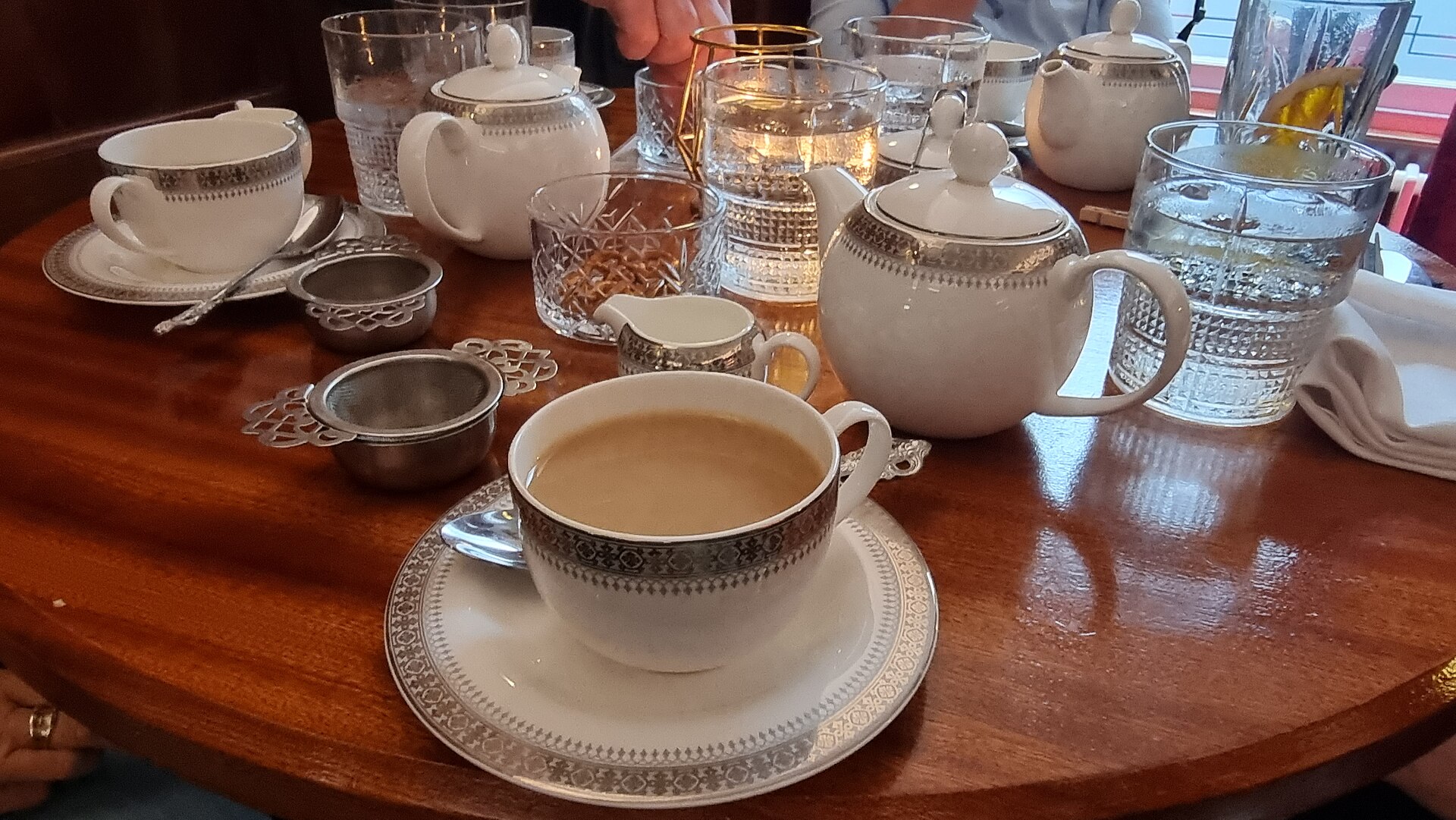
"Afternoon tea" and "high tea" get used interchangeably — particularly by hotels and cafés selling the fancy version — but historically they're different meals: different times, different tables, different social classes, different food. The confusion is understandable; the distinction is real and still useful when you're booking a tea experience or reading about British customs.
Afternoon tea: the elegant one
Afternoon tea is the genteel ritual most people picture: a tiered stand of small sandwiches (cucumber, egg, smoked salmon), scones with clotted cream and jam, small cakes and pastries, and a pot of good tea — taken in the mid-to-late afternoon, roughly 3–5 p.m. It emerged in the 19th century among upper-class households to fill the long gap between lunch and a fashionably late dinner. It was social theatre: fine porcelain, guests, conversation — and food as delicate as the company.
When a London hotel or tea room advertises "afternoon tea" today, this is what you get — the tiered stand, the scones, the lingering over tea. It's an experience, not a meal meant to fill you up, and it still reads as a treat rather than dinner.
High tea: the actual meal
High tea is the working-class counterpart and, despite the name suggesting fancier, it's the more substantial of the two. It developed in industrial Britain as the evening meal for workers coming home hungry — served around 5–7 p.m. at a proper dining table (a "high" table, hence possibly the name) — with hot dishes: meats, pies, eggs, baked beans, bread, cheese, and plenty of strong tea to wash it down.
The critical difference: afternoon tea is delicate refreshments between meals; high tea is the evening meal. One is a social occasion; the other is dinner with tea.
Side by side
| Afternoon tea | High tea | |
|---|---|---|
| When | ~3–5 p.m. | ~5–7 p.m. |
| What | Finger sandwiches, scones, small cakes | Hot cooked dishes — meat, pies, eggs, bread, beans |
| Class origin | Upper-class leisure ritual | Working-class evening meal |
| Function | Refreshment between lunch and late dinner | The main evening meal itself |
| Modern meaning | The hotel/tea-room experience | Regional supper; often misused for afternoon tea |
Why the names get blurred
"High tea" sounds fancier — and marketers leaned in. Outside Britain (and in some tourist-facing places inside it), "high tea" is frequently used for the tiered-stand afternoon experience, because the name sells elegance better. Meanwhile in parts of the UK — northern England, Scotland — "tea" by itself is still the everyday word for the evening meal, the direct descendant of the high-tea usage: "What's for tea?" means "What's for dinner?"
So the term's meaning depends on who's using it and where: at a Mayfair hotel, "high tea" usually means the dainty afternoon affair (marketed under a grander name); in a Lancashire household, "tea" means supper. Neither is wrong in context — they're just different eras of usage colliding.
How the terms are used today
In modern commercial Britain — and especially in hotels, cruise lines, and tourist tearooms abroad — "afternoon tea" is the accurate, dominant term for the tiered-stand experience, while "high tea" appears mainly as a marketing synonym trying to sound grander. Knowing the historical distinction helps you read a menu correctly: if a venue says "high tea" but shows photos of tiered stands and scones, they're selling afternoon tea under a fancier label — which is fine, just don't expect a hot supper.
Regional usage adds the other layer: in northern England and Scotland, "tea" for the evening meal isn't quaint — it's current vocabulary, and an invitation to "have your tea" is dinner. The same word means three different things depending on postcode and context, which is part of why the confusion never dies.
What to expect as a visitor
Booking "afternoon tea": expect a seated experience of 1.5–2 hours, a set tiered menu, tea refills (sometimes champagne add-ons), smart-ish dress, and prices that reflect the occasion — it's an event, not a quick cuppa.
Invited "for tea" in Britain: context rules. In many households it means the evening meal — come hungry, expect a proper dinner, not finger sandwiches. If in doubt, asking "proper tea or afternoon tea?" is a completely normal clarification.
The third option — cream tea: the lighter cousin you'll meet in Devon and Cornwall tearooms: scones, clotted cream, jam, tea — no sandwiches, no tiers, no ceremony. An afternoon stop, not a meal. The two counties even argue about the order: Devon puts cream first, Cornwall jams first — a rivalry taken with complete seriousness and zero actual stakes.
Booking etiquette worth knowing: afternoon tea at a hotel is reserved seating with a set menu — book ahead, mention dietary needs when you do, and expect the sitting to be unhurried. This is one of the few meals where slow is the entire point.
Whichever you attend, the tea itself matters more than the terminology: a strong breakfast blend or Assam is the classic companion for the full spread, while something lighter suits cream tea. If the naming confusion sends you toward brewing fundamentals instead, the tea-type guide and steep times are the useful next reads.