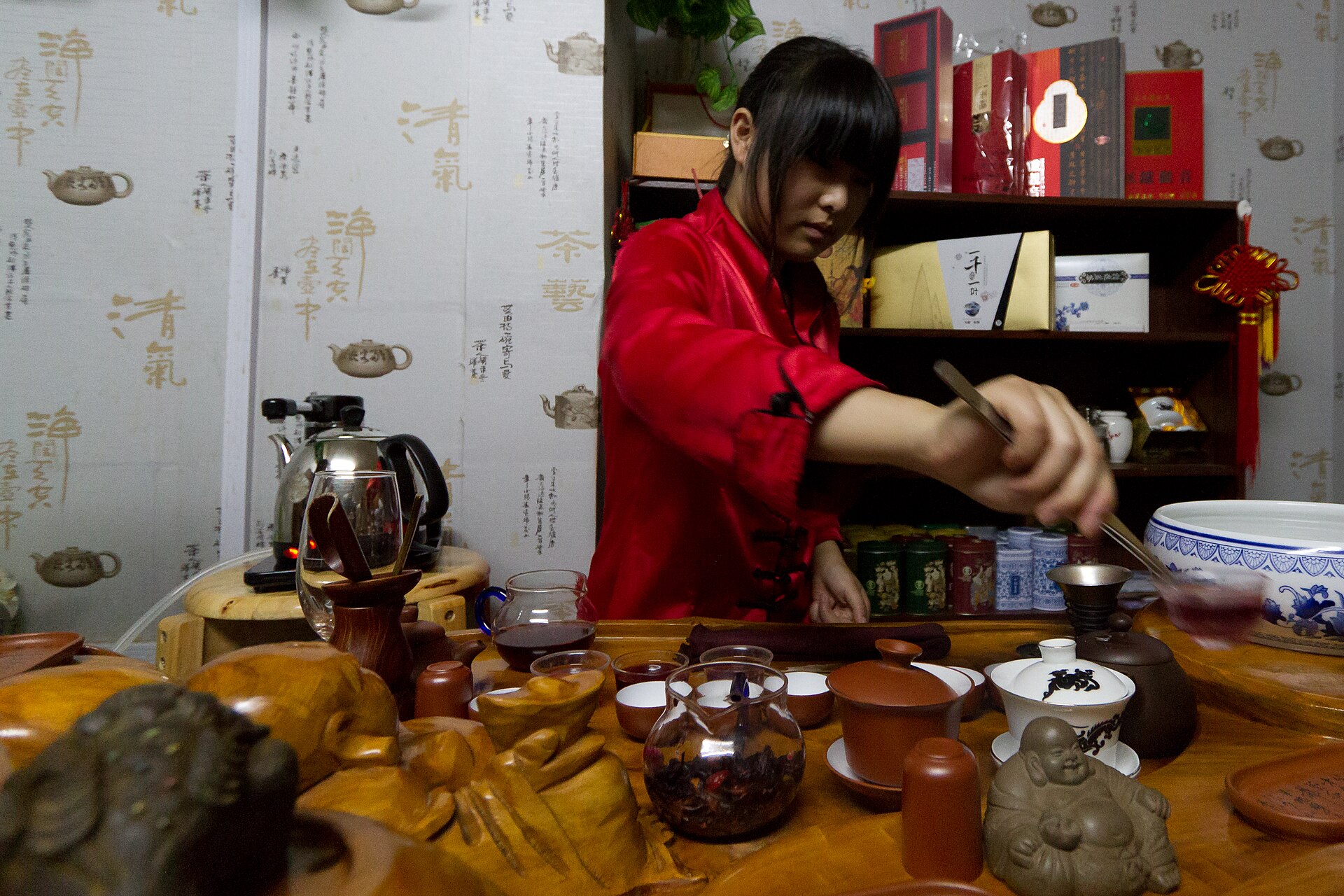
A Chinese tea ceremony can mean different things depending on where you go. One experience might involve a tea master preparing several teas with a gaiwan, explaining the leaves and brewing methods. Another might take place in a traditional tea house, where you learn about local customs while tasting regional tea. Some activities focus more on performance, photography, or cultural entertainment.
If you are visiting China for the first time, it can be difficult to know which experience is worth booking. A beautiful room and traditional tea set may look impressive, but they do not necessarily tell you how much you will learn about tea.
The best experience depends on what you want from it. You might want to understand Chinese tea traditions, learn how to brew tea, taste unfamiliar varieties, or simply enjoy a quiet cultural activity during your trip.
Here is how to choose an experience that matches your interests, budget, and travel plans.
What Does a Chinese Tea Ceremony Actually Involve?
There is no single ceremony followed by every tea house in China. Tea preparation varies by region, tea type, and the purpose of the gathering.
A guided tea experience commonly includes several elements:
- An introduction to the tea: The host explains the variety, its origin, and sometimes how it is processed.
- Preparing the tea: You may watch the host warm the teaware, measure the leaves, add water, and control the brewing time.
- Tasting several infusions: Many Chinese teas can be brewed multiple times, with the aroma and flavor changing from one infusion to the next.
- Learning about tea utensils: Depending on the session, the host may demonstrate a gaiwan, a small teapot, a fairness pitcher, or tasting cups.
- Discussing tea culture: Some experiences explain regional traditions, hospitality, and the role of tea in daily life.
Not every session includes all these elements. A short tasting may focus almost entirely on comparing flavors, while a formal tea ceremony may emphasize the movements, presentation, and atmosphere of preparation.
Before booking, check what the activity actually involves rather than relying on the words "traditional tea ceremony" alone.
Decide What Kind of Tea Experience You Want
The first step is to identify what interests you most. Different activities suit different travelers, and a formal ceremony is not automatically better than a casual tea tasting.
| Type of experience | What you can expect | Best for |
|---|---|---|
| Guided tea ceremony | A host prepares tea and explains the process | Travelers interested in tradition and presentation |
| Tea tasting | You sample different teas and compare their aromas and flavors | Beginners who want to understand Chinese tea |
| Hands-on brewing class | You learn to prepare tea using traditional utensils | Travelers who want practical skills |
| Tea house visit | You experience tea in a social or everyday setting | Visitors interested in local life |
| Tea plantation or producer visit | You learn about growing, harvesting, or processing tea | Travelers curious about where tea comes from |
Some activities combine two or more formats. For example, a tea workshop might include a short cultural introduction followed by a tasting and a hands-on brewing session.
If you have limited time, a guided tasting may be enough. If you want to learn a skill you can use at home, choose a class that lets you prepare the tea yourself.
Look for Real Tea Knowledge, Not Just Traditional Decorations
Traditional furniture, calligraphy, wooden tea trays, and ceramic cups can create a memorable setting. They can also be part of a genuine cultural experience. However, appearance alone is not a reliable way to judge the quality of a tea ceremony.
Look for signs that the host can explain the tea itself.
A worthwhile session should ideally help you understand at least some of the following:
- What tea you are drinking and where it comes from.
- How the tea is processed and why that affects its flavor.
- Why the host chooses a particular water temperature or brewing time.
- How the flavor changes with different brewing methods or successive infusions.
- How the utensils are used and why they suit the tea.
You do not need an expert-level lesson. Even a short session can be informative if the host encourages questions and explains the reasons behind the brewing process.
Be cautious about descriptions that promise a mysterious or ancient ritual without explaining what participants will actually do. Likewise, claims that one particular ceremony represents all of Chinese tea culture should be treated carefully. Tea traditions differ across regions and communities.
The goal is not to find the most elaborate performance. It is to find an experience that helps you understand something meaningful about Chinese tea.
Choose the Right Tea for Your Interests
China produces many types of tea, and the variety served can significantly affect your experience.
If the activity allows you to choose, consider starting with a tea style that interests you.
Green tea
Longjing from Hangzhou is a well-known example. Green tea can be a good introduction for travelers who enjoy fresh, delicate flavors and want to learn how processing affects the finished leaves.
Oolong tea
Oolong offers a wide range of aromas and flavor profiles. Tieguanyin from Anxi and Wuyi rock teas from Fujian are useful examples if you want to compare different regional traditions.
White tea
White tea can offer a gentler introduction to a different style of tea processing. A tasting may explain how the handling of the leaves influences their character.
Pu'er tea
Pu'er from Yunnan is particularly interesting if you want to learn about raw and ripe styles, fermentation, storage, and the way tea changes over time.
You do not have to know which tea you prefer before booking. In fact, a tasting that compares two or three varieties may be more useful than a session built around a single unfamiliar tea.
If you have a strong preference, ask which teas will be served. If you are a beginner, look for a host who can explain the differences in plain language rather than expecting you to recognize specialist terminology.
Choose an Experience That Fits Your Destination
The city you visit can influence the kind of tea experience available to you.
For example, Hangzhou is closely associated with Longjing green tea and its surrounding tea-growing villages. It is a natural choice if you want to connect a tea tasting with the landscape and production of a famous Chinese tea.
Chengdu offers a different perspective. Traditional teahouses provide opportunities to see tea as part of ordinary social life, rather than exclusively as a formal ceremony.
In Fujian, places such as Wuyishan and Anxi are associated with distinctive oolong teas. These destinations are worth considering if you want to learn more about regional varieties and tea production.
You can also find guided tea experiences in major cities such as Beijing and Shanghai, where the format may be more convenient for travelers with limited time.
Before choosing, ask yourself whether you want a dedicated tea activity or something that fits into a broader sightseeing itinerary.
If you want to understand the differences between destinations, see our guide to where to experience Chinese tea culture in China.
Check What Is Included Before Booking
Two activities with similar names can offer very different experiences. Reading the booking details carefully can prevent disappointment.
Before paying, check these points:
Duration
Is the session a brief introduction or a more detailed workshop? Make sure you have enough time to enjoy the activity without rushing to your next attraction.
Tea selection
Does the price include several teas, or will you taste only one? If learning about different varieties is important to you, this detail matters.
Participation
Will you simply watch the host prepare tea, or will you have an opportunity to brew it yourself?
Language
Is the session conducted in English, or is an English-speaking guide available? If you want to understand the cultural background, language can make a substantial difference.
Group size
A small group may make it easier to ask questions and observe the brewing process. A larger group may be suitable for a short demonstration, but individual instruction may be limited.
Additional costs
Check whether the listed price includes all tea, utensils, instruction, and any transportation or tasting fees. Ask whether there is an expectation to purchase tea after the session.
Location and booking arrangements
Confirm the venue, meeting point, cancellation policy, and whether advance reservations are required.
A clear description of these details is often more useful than a page filled with photographs and broad promises about an unforgettable cultural experience.
Should You Book a Private or Group Tea Ceremony?
Neither format is necessarily more authentic. The better choice depends on your priorities.
A private session can be useful if you want detailed explanations, have specific questions, or prefer to learn at your own pace. It may also be more suitable for couples or families who want a quieter activity.
A group session can be a good choice if you are interested in a structured introduction and do not need extensive individual instruction. It may also be less expensive per person, depending on the provider.
Consider the format alongside the content. A small group tasting with a knowledgeable host may teach you more than an expensive private session that focuses primarily on presentation.
If you are traveling alone, check the minimum group size and whether the provider accepts individual bookings. Some experiences operate only when enough participants have registered.
How Much Should You Pay for a Chinese Tea Ceremony?
There is no single standard price for a Chinese tea ceremony. Costs depend on the city, venue, duration, teas served, group size, language support, and whether the activity includes hands-on instruction.
A casual tea house visit may simply involve paying for the tea you order. A guided tasting or workshop may charge a separate participation fee. Private experiences and activities at specialist venues may cost more.
Instead of comparing prices alone, compare what you receive.
For example, a higher-priced session might include several regional teas, a detailed explanation of processing, and time to practice brewing. A cheaper activity might be a short demonstration with limited interaction. Neither is automatically the better option; it depends on what you want to learn.
Before booking, ask whether tea purchases are optional and whether any additional charges apply. If the experience takes place at a tea shop, it is reasonable to clarify whether there will be an opportunity to buy tea afterward.
Do not assume that a more expensive tea ceremony is more traditional or educational. Clear information about the experience is a better starting point.
What Should You Wear, and Do You Need to Know Tea Etiquette?
For most tea experiences, comfortable, neat clothing is sufficient. You generally do not need to rent traditional clothing or prepare for a formal ceremony unless the organizer specifically describes that format.
You also do not need to be familiar with Chinese tea etiquette before attending.
A few simple habits will help:
- Listen when the host explains how to handle the teaware.
- Hold cups carefully, especially when they are small or hot.
- Ask questions if you are unsure how to taste or serve the tea.
- Avoid assuming that every gesture has a fixed meaning across all Chinese tea traditions.
- Follow the host's guidance rather than worrying about memorizing a long list of rules.
In some settings, you may see people lightly tap their fingers on the table to express thanks when tea is poured for them. This custom is associated with certain tea-drinking contexts, particularly in southern China, but it is not a universal requirement for every tea ceremony.
A good host will help first-time visitors feel comfortable. Curiosity and respect matter more than pretending to be an expert.
Can You Join a Chinese Tea Ceremony Without Speaking Chinese?
Yes, but the quality of the explanation will depend on the activity and the host.
Some sessions rely mainly on demonstrations, so you can still observe the brewing process without understanding every word. However, if you want to learn about regional tea traditions, processing methods, or the meaning of particular practices, an English-language explanation will make the experience more rewarding.
Before booking, check whether the host speaks English, whether an interpreter is available, or whether the session includes written explanations.
It is also useful to ask whether the experience is designed for beginners. A specialist tasting intended for experienced tea drinkers may use terminology that is difficult to follow without some background knowledge.
If you cannot find a suitable guided session, visiting a tea museum or choosing a tasting with clear written descriptions can be a practical alternative.
Questions to Ask Before You Book
If the listing does not provide enough detail, contact the organizer before making a reservation.
These questions can help you understand what you are paying for:
- Which teas will we taste, and where do they come from?
- Will the host explain the brewing process and the background of each tea?
- Can participants prepare tea themselves?
- Is the session conducted in English?
- How long does the activity last, and how many people usually attend?
- Are all teas and materials included in the price?
- Is advance booking required, and what happens if plans change?
You do not need to ask every question. Focus on the details that matter most to you.
For instance, if your main interest is learning to brew tea, participation is more important than the appearance of the venue. If you want a relaxing cultural activity, the atmosphere and group size may matter more.
Is a Chinese Tea Ceremony Worth It?
A Chinese tea ceremony can be worthwhile if you want more than a quick drink. It can introduce you to unfamiliar tea varieties, show how brewing methods affect flavor, and help you understand why tea has such an important place in Chinese social and cultural life.
However, not every traveler needs a formal ceremony. If you are mainly curious about everyday habits, spending time in a traditional teahouse may be a better fit. If you want to understand how tea is grown and processed, a visit to a tea-producing region may be more informative.
Before booking, decide what you hope to gain from the experience. Look for a host who can explain the tea clearly, check what the price includes, and choose a format that suits your schedule.
The most rewarding tea experience is not necessarily the most expensive or elaborate. It is the one that leaves you with a better understanding of the tea in your cup and the culture surrounding it.