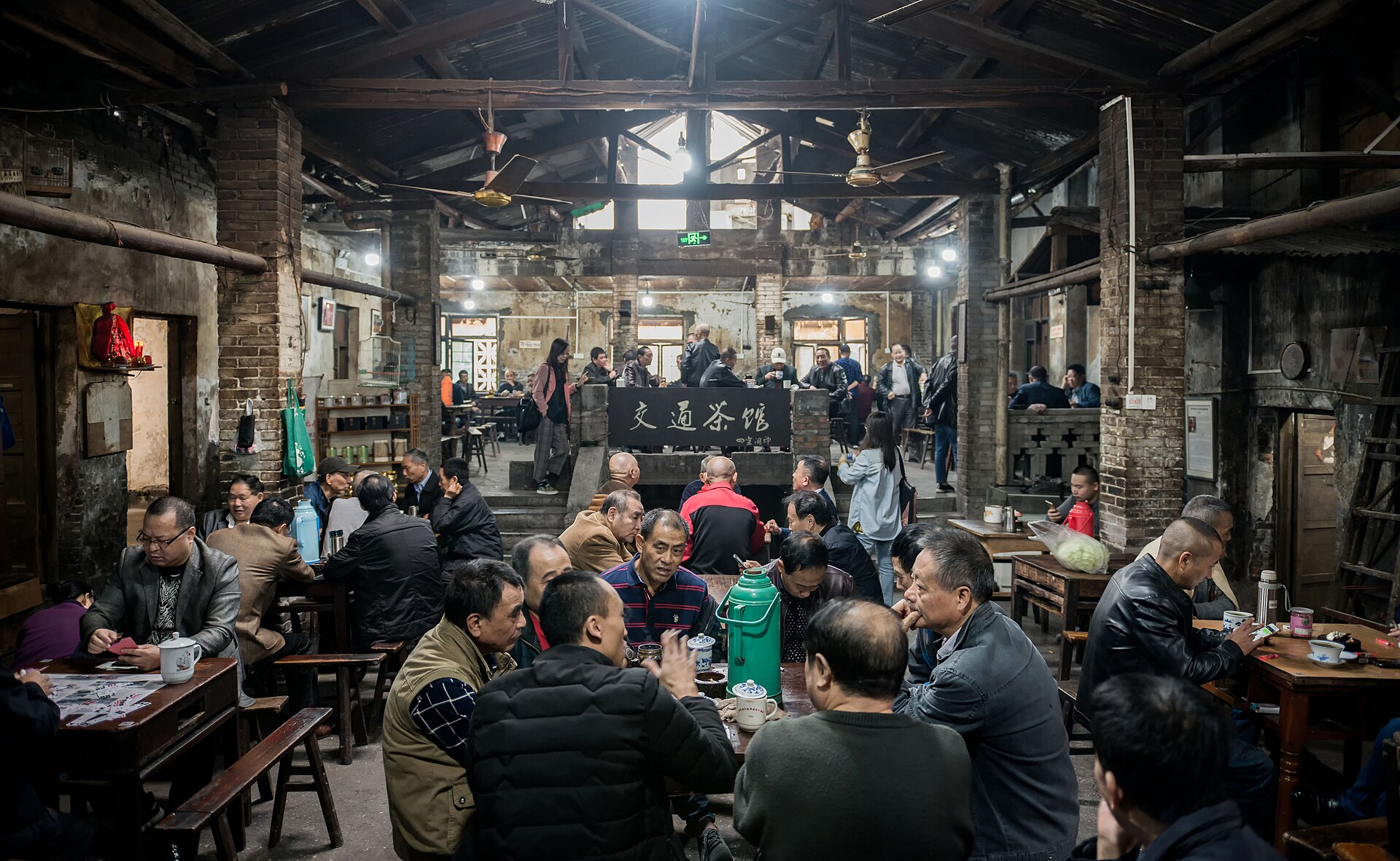
Imagine walking into a traditional Chinese teahouse and seeing people sitting around small tables, chatting with friends, reading newspapers, or playing games. Some hold small cups of tea, while others use a lidded bowl to brew their own.
Nobody seems to be in a hurry.
For visitors unfamiliar with Chinese tea culture, this can be surprising. Is there a formal ceremony to follow? Do you need to know which tea to order? And is it acceptable to sit there for an entire afternoon?
In many Chinese teahouses, the answer is simpler than you might expect. Tea is not always a special occasion. It can be an ordinary part of social life, a reason to meet friends, or simply a pleasant way to spend a few quiet hours.
However, the experience varies by city and venue. A traditional neighborhood teahouse in Chengdu may feel very different from an elegant tea room designed for guided tastings.
What Do People Actually Do in a Chinese Teahouse?
One of the most interesting things about a traditional Chinese teahouse is that people do not necessarily visit just to drink tea.
In Chengdu, for example, teahouses are associated with relaxed social gatherings. People may chat, play mahjong, read, or watch daily life unfold around them. In other cities, tea houses may focus more on carefully prepared tea, traditional surroundings, or organized tastings.
You might see older residents meeting friends, families spending time together, or visitors learning about regional tea varieties.
This is part of what makes a teahouse different from a typical coffee shop. The emphasis is not always on getting a drink and leaving. In some places, sitting and talking for a long time is part of the experience.
If you want to observe everyday tea culture rather than attend a formal demonstration, a local teahouse can be a good place to start.
How Do You Order Tea?
The ordering process depends on the venue.
In a simple teahouse, you may choose from a menu and order a pot or serving of tea. In a more specialized tea room, the staff may ask what kinds of tea you enjoy and suggest something based on your preferences.
You do not need to know the names of dozens of Chinese teas before visiting. If the menu is unfamiliar, you can ask for a recommendation or choose a familiar category, such as green tea, oolong, or black tea.
Keep in mind that Chinese tea categories do not always correspond exactly to the flavors you might expect from tea sold in your home country.
If you are new to Chinese tea, these are useful starting points:
- Green tea: Often fresh and vegetal, with flavors that vary by variety and processing.
- Oolong tea: A broad category that can range from floral and light to rich and roasted.
- Black tea: In Chinese tea terminology, this generally refers to what is called black tea in English, rather than the Chinese category often translated as dark tea.
- Pu'er tea: A specialty associated with Yunnan, available in different styles with distinctive processing and flavor characteristics.
Some traditional teahouses serve tea in a gaiwan, a small bowl with a lid used for brewing and drinking tea. Others may provide a teapot and cups. Follow the staff's instructions if you are unsure how to use the equipment.
Can You Stay for Hours?
In some traditional teahouses, yes. Spending an extended period over tea is part of the appeal, especially in places known for their relaxed social atmosphere.
Chengdu is a particularly good example. At certain teahouses, people settle into chairs, order tea, talk with friends, and enjoy the surroundings without treating the visit as a quick stop.
However, there is no universal rule about how long you can stay. Some venues charge by the pot or serving, while others may have different pricing arrangements. Busy tourist areas and modern tea rooms may operate differently from neighborhood establishments.
Before settling in, check the menu and any time-based charges. If you are unsure whether refills are included, simply ask.
A leisurely visit is part of the charm, but it is still important to respect the venue's policies, especially during busy periods.
Is There Any Tea Etiquette You Should Know?
You do not need to memorize a complicated set of rules before visiting a Chinese teahouse. Being polite, handling the cups carefully, and following the host's guidance are usually enough.
A few practical points can help:
- Handle the teaware carefully. Small cups, gaiwans, and teapots can become hot.
- Watch how the tea is served. If the host demonstrates a brewing method, observe before trying it yourself.
- Ask questions. It is perfectly reasonable to ask what tea you are drinking or how it is prepared.
- Do not worry about knowing every custom. Tea etiquette varies by region, venue, and social setting.
You may also see people lightly tapping their fingers on the table when someone pours tea for them. This gesture is associated with expressing thanks in some tea-drinking contexts, particularly in southern China. It is not a mandatory gesture in every teahouse.
The best approach is to remain curious rather than worrying about making a small cultural mistake.
What Is the Difference Between a Teahouse and a Tea Ceremony?
These experiences can overlap, but they serve different purposes.
A traditional teahouse is often a place to drink tea and spend time with other people. The main attraction may be the atmosphere, the social experience, or the opportunity to observe local customs.
A tea ceremony or guided tea session is usually more structured. A host may explain the tea, demonstrate particular brewing methods, introduce traditional utensils, and guide participants through a tasting.
Neither is automatically better. If you want to see how tea fits into everyday life, choose a teahouse. If you want a more detailed explanation of tea preparation, consider a guided experience.
If you are planning a dedicated activity, our guide to choosing a Chinese tea ceremony experience explains what to look for before booking.
Where Should You Go for Your First Teahouse Experience?
Chengdu is a particularly appealing choice for travelers who want to experience a relaxed, traditional teahouse atmosphere. People's Park is a well-known place to observe this aspect of local life, with Heming Teahouse among its recognizable venues.
If you are visiting Hangzhou, you might prefer a tea house associated with Longjing green tea. This can provide a different experience, connecting the drink with the region where it is grown.
In Guangzhou, tea is often enjoyed alongside dim sum as part of the yum cha tradition. Here, the social experience revolves around food and tea together rather than a dedicated tea ceremony.
The best choice depends on what you want to experience: relaxed local life, regional tea, or tea as part of a traditional meal.
For more destinations, see our guide to 10 places to experience Chinese tea culture.
A Simple Way to Enjoy Your First Visit
You do not need to plan an elaborate activity to appreciate a traditional Chinese teahouse.
Choose a venue that interests you, order a tea you would like to try, and give yourself enough time to enjoy it. Observe how other people use the space, ask the staff about the tea, and pay attention to the small details of serving and brewing.
You may discover that the most memorable part is not a formal ritual at all. It is the chance to slow down and experience a place where tea is part of ordinary life.
That is one of the most valuable things a traditional Chinese teahouse can offer: a glimpse of how a simple cup of tea can bring people together.