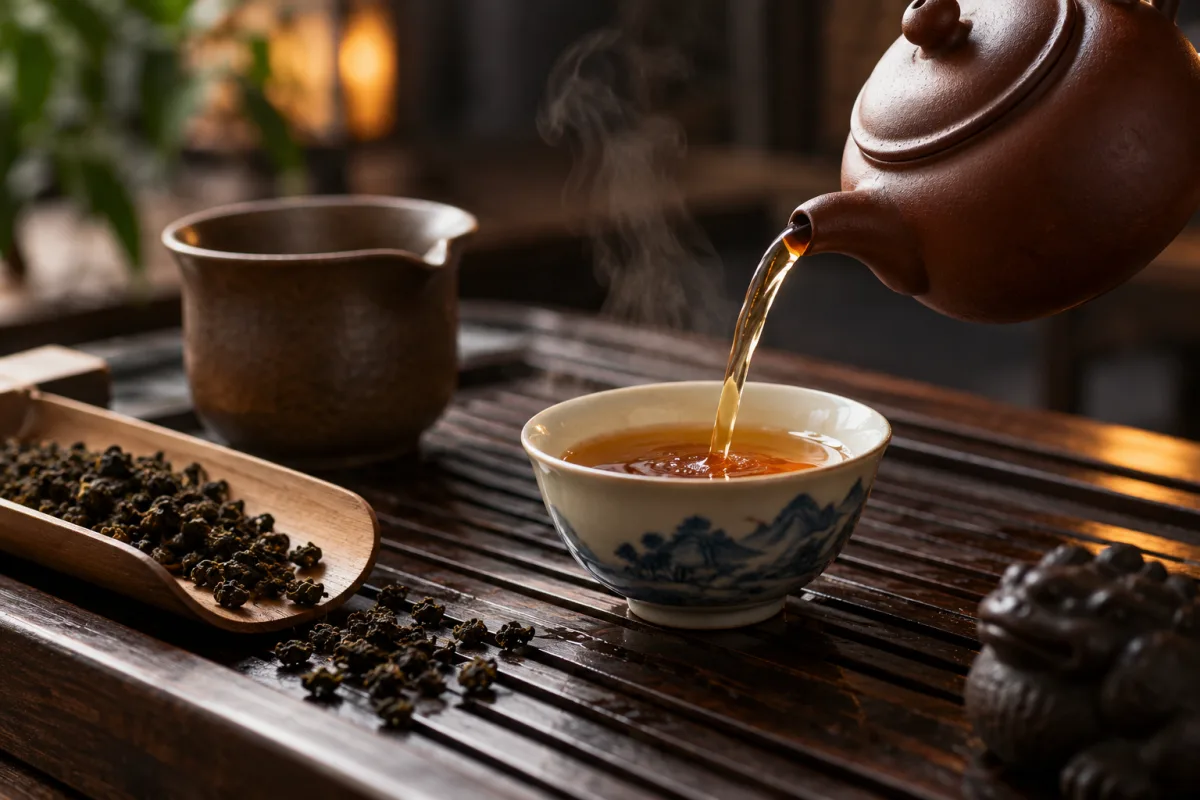
Have you ever taken a sip of unsweetened tea, noticed a slightly bitter taste at first, and then felt a gentle sweetness in your mouth after swallowing?
This experience is often called hui gan (回甘), or returning sweetness. It is a familiar term among Chinese tea drinkers and is especially discussed when tasting oolong, Pu-erh, and certain green teas.
The interesting part is that the tea does not need to contain added sugar to create this sensation.
Some teas naturally leave a sweet, pleasant impression after you swallow them. The sensation may appear on your tongue, around the sides of your mouth, or toward the back of your throat.
Here is why it happens, which teas are known for it, and how you can recognize it when drinking tea.
What Does Hui Gan (Returning Sweetness) Mean?
Hui gan is a Chinese tea-tasting term that describes a sweetness that develops or becomes noticeable after drinking tea.
It is different from the immediate sweetness you taste in a sugary drink.
For example, when you drink sweetened iced tea, the sweetness is usually obvious as soon as the liquid touches your tongue.
With hui gan, the tea may initially taste slightly bitter, astringent, or even neutral. After swallowing, a sweet sensation gradually appears and remains in your mouth.
This experience can be especially noticeable with certain Chinese teas.
However, not every tea produces the same effect. Some have an immediate sweet taste, while others leave a more noticeable lingering sweetness.
Why Does Tea Become Sweet After You Swallow It?
The sensation of returning sweetness involves several aspects of taste perception and the chemical compounds naturally present in tea.
Tea contains compounds such as catechins, caffeine, amino acids, sugars, and aromatic substances. Their balance contributes to the overall flavor.
Two important characteristics help explain why some teas seem to become sweeter after swallowing.
The relationship between bitterness and sweetness
Some tea compounds, particularly certain catechins, contribute to bitterness and astringency.
After swallowing, these sensations may become less noticeable, allowing a lingering sweet impression to stand out.
Changes in mouthfeel and saliva
Astringency can interact with saliva and create a dry or puckering sensation. As your mouth returns to its normal feeling, you may notice a more pleasant and slightly sweet aftertaste.
The exact mechanisms behind hui gan are complex, and the experience varies between individuals.
It is also important to understand that returning sweetness does not mean the tea suddenly produces sugar in your mouth. It is a sensory experience influenced by the tea's composition and how you perceive its aftertaste.
Which Teas Are Known for Returning Sweetness?
Some teas are particularly appreciated for their lingering sweetness. However, the experience depends on the specific tea, its processing, storage, and brewing.
Here are several types worth exploring.
Tieguanyin (Iron Goddess of Mercy)
Some Tieguanyin oolongs have a fresh, floral aroma followed by a gentle sweet aftertaste.
Lightly oxidized versions may offer orchid-like aromas and a clean finish, while roasted versions can have warmer, toasted flavors.
Phoenix Dan Cong
Phoenix Dan Cong is often appreciated for its complex aroma and lingering flavor.
Depending on the variety, you may notice floral, fruity, honey-like, or slightly mineral characteristics. Some examples have a particularly noticeable sweet aftertaste.
Raw Pu-erh (Sheng Pu-erh)
Raw Pu-erh can have a complex combination of bitterness, astringency, freshness, and sweetness.
Some young raw Pu-erh teas have a more noticeable initial bitterness followed by returning sweetness. Aged examples may develop a different balance of flavors depending on their storage history.
White Tea
Certain white teas, including Bai Mudan and aged white tea, can have a soft, sweet aftertaste.
You may notice notes of dried flowers, honey, hay, or light fruit. Their sweetness is often gentler rather than sharp or intense.
Chinese Green Tea
Some Chinese green teas, such as Longjing, are appreciated for their balance of freshness, gentle bitterness, and natural sweetness.
When brewed properly, they may leave a clean and pleasant finish.
Is Returning Sweetness the Same as a Tea Having a Sweet Taste?
No. These are related but different tasting experiences.
A tea can taste sweet from the first sip without producing much returning sweetness.
Likewise, a tea that initially tastes slightly bitter may leave a noticeable sweet aftertaste.
Consider these examples:
| Tea experience | What you may notice |
|---|---|
| Immediate sweetness | A sweet taste appears as soon as you sip |
| Returning sweetness | Sweetness becomes noticeable after swallowing |
| Honey-like aroma | The tea smells similar to honey or nectar |
| Lingering sweetness | A pleasant sweet impression remains in the mouth |
A honey-like aroma is not necessarily the same as a sweet taste. Your nose contributes strongly to how you perceive flavor, so a tea that smells sweet may not taste particularly sweet.
This distinction is useful when comparing different teas.
How to Recognize Returning Sweetness When Drinking Tea
If you are new to Chinese tea, hui gan may not be immediately obvious.
You can try a simple tasting exercise.
- Take a small sip of unsweetened tea.
- Pay attention to the first taste. Is it fresh, bitter, floral, or slightly astringent?
- Swallow the tea naturally.
- Wait a few seconds without immediately drinking more.
- Notice whether a sweet sensation develops on your tongue or around your throat.
- Pay attention to how long the sensation lasts.
Try this with two different teas, such as Tieguanyin and raw Pu-erh.
You may find that one tea produces an immediate sweet impression, while the other has a more noticeable change after swallowing.
There is no need to force yourself to identify a particular sensation. People's sensitivity to bitterness, sweetness, and astringency varies.
Can Brewing Method Affect Returning Sweetness?
Yes. Brewing conditions can change how much of the tea's different flavor compounds enter your cup.
If you use too much tea or steep it for too long, bitterness and astringency may become overwhelming.
This can make it harder to appreciate the tea's sweeter characteristics.
A few adjustments can help:
- Use an appropriate water temperature: Delicate green teas often benefit from cooler water, while many oolongs and Pu-erh teas can handle hotter water.
- Avoid excessive steeping: If the tea tastes harsh, shorten the infusion.
- Use a balanced amount of leaves: Too many leaves can create an overly concentrated cup.
- Try multiple infusions: Some loose-leaf oolongs and Pu-erh teas reveal different flavor characteristics across several brews.
The purpose is not to make every tea taste sweet. It is to find a brewing balance that allows its natural flavors to come through.
Why Does Some Tea Leave a Sweet Aftertaste While Others Do Not?
Not all tea leaves have the same chemical composition or flavor characteristics.
Several factors can influence the final sensation.
Tea variety and cultivar: Different tea plants naturally produce different balances of flavor compounds.
Growing conditions: Elevation, climate, sunlight, soil, and harvest conditions can influence leaf development and flavor.
Processing: Oxidation, heating, rolling, and roasting can change the chemical composition and aroma of tea.
Storage: Poor storage can cause tea to lose its freshness and develop stale or unpleasant flavors.
Brewing: Water temperature, steeping time, and leaf quantity influence the balance of compounds extracted into the cup.
This is why two teas from the same general category can have very different aftertastes.
A good tea does not necessarily have the strongest returning sweetness. The overall balance of aroma, taste, texture, and finish matters more.
Final Thoughts
Tea can taste sweet after you swallow it because the flavor experience continues after the liquid has left your mouth. This returning sweetness is known as hui gan in Chinese tea culture.
Tieguanyin, Phoenix Dan Cong, raw Pu-erh, and certain white and green teas are worth exploring if you want to experience this characteristic.
The next time you drink unsweetened tea, pay attention to what happens after each sip. The initial taste is only part of the experience; the aftertaste can reveal another side of the tea.