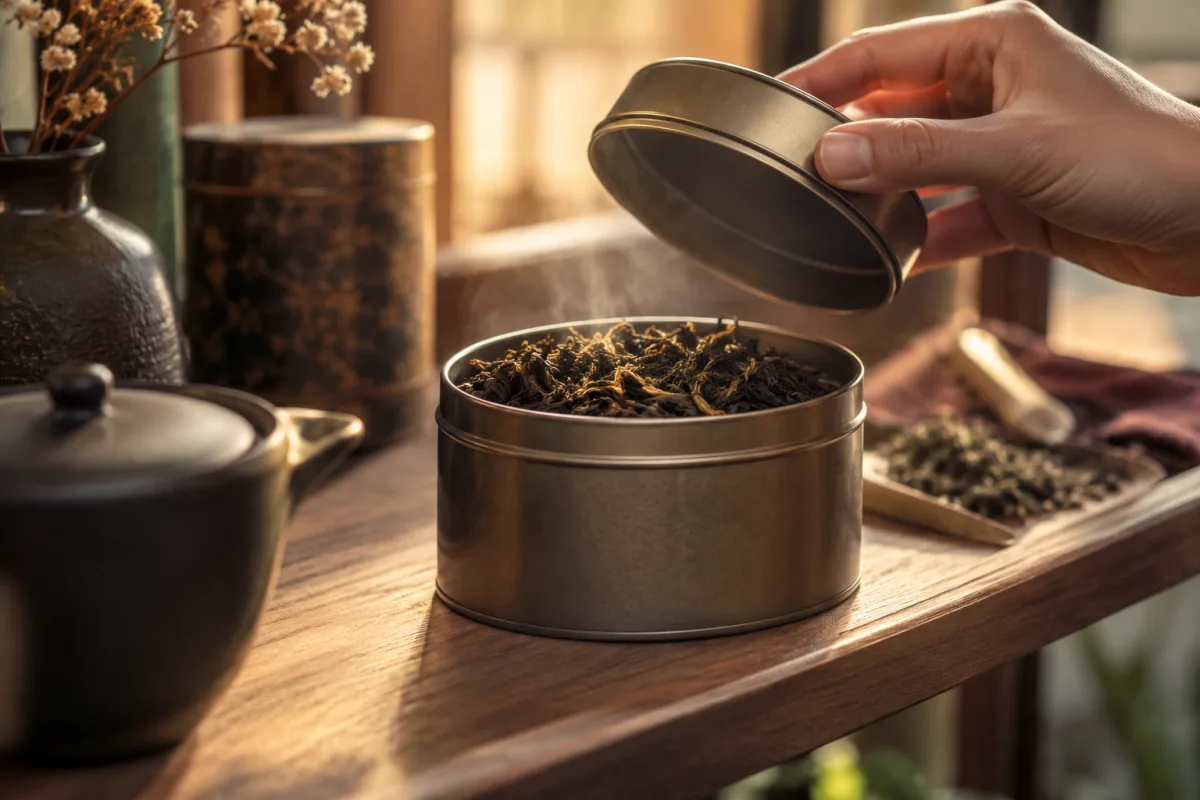
You open a container of loose leaf tea expecting its usual fresh fragrance, but something seems different. The leaves smell weaker than before, and even after brewing, the tea has very little aroma.
This can happen with many types of tea, including green tea, oolong, white tea, and black tea.
Tea aroma comes from volatile compounds that contribute to its floral, fruity, grassy, roasted, and other characteristic scents. Over time, these compounds can change or become less noticeable, especially when tea is exposed to air, heat, light, or moisture.
If your loose leaf tea no longer smells as fragrant as it once did, several storage and handling issues may be responsible.
Exposure to Air Can Cause Tea to Lose Its Fresh Aroma
Air is one of the main factors that affects loose leaf tea during storage.
Once you open a tea package, the leaves are exposed to oxygen. Over time, oxidation and other chemical changes can affect the compounds responsible for their original aroma.
You may notice that:
- Fresh green tea no longer smells grassy or fresh.
- Floral oolong loses some of its delicate fragrance.
- Black tea develops a flatter, less distinctive smell.
- The brewed tea tastes less lively than it used to.
This does not mean that every tea becomes unusable immediately after opening. The speed of aroma loss depends on the tea type, packaging, storage conditions, and how often the container is opened.
What to do:
Transfer tea from an opened package into a clean, airtight container. Close the lid promptly after taking out the leaves instead of leaving the container open while preparing your tea.
If you buy large quantities, consider dividing them into smaller containers. This reduces how often the entire supply is exposed to air.
Moisture Can Affect Both Tea Aroma and Quality
Loose leaf tea should be kept dry.
Tea leaves can absorb moisture from humid air, especially when stored in poorly sealed containers or near sinks and cooking areas.
As moisture levels increase, the tea may lose its original crisp, dry character. Its aroma can become dull, stale, or unpleasant.
More importantly, damp tea can create conditions that encourage mold growth.
Watch for these signs:
- Leaves feel damp or unusually soft.
- The tea has developed a musty or moldy smell.
- You notice visible mold or unusual growth.
- The leaves have changed in appearance after being exposed to moisture.
If you suspect mold or moisture damage, do not try to fix the tea by drying it or brewing it with hot water. Discard it.
What to do:
Keep loose leaf tea in a completely dry container. Avoid using wet spoons, and never return used tea leaves to the original storage package.
In humid environments, an airtight container is especially important.
Heat and Sunlight Can Damage Tea's Fragrance
Where you store your tea matters.
A container placed beside a sunny kitchen window, on top of a refrigerator, or near an oven may be exposed to more heat than you realize.
Heat can accelerate chemical changes in tea leaves, while direct light can contribute to the deterioration of some aroma and flavor compounds.
This is particularly noticeable with delicate teas whose appeal depends on fresh, light aromas.
For example, a fresh green tea stored in a warm, bright location may lose its original grassy and vegetal fragrance faster than the same tea kept in a cool, dark place.
What to do:
Store tea away from:
- Direct sunlight.
- Ovens and stovetops.
- Radiators and other heat sources.
- Warm windowsills.
- Areas with large temperature changes.
A cool, dry cupboard away from cooking appliances is often a practical storage location.
Your Tea May Have Absorbed Smells From Other Foods
Tea leaves can absorb surrounding odors.
This is one reason why storing loose leaf tea beside coffee, spices, dried herbs, or strongly scented foods is not a good idea.
For example, if you keep jasmine green tea in a container near ground coffee, the tea may gradually pick up some of the surrounding smell.
The original floral fragrance can become less noticeable, and the brewed tea may no longer taste as clean as expected.
This is especially important for delicate teas such as jasmine tea, white tea, and lightly oxidized oolong.
What to do:
Keep different teas in separate, well-sealed containers.
Avoid storing tea next to:
- Ground coffee and coffee beans.
- Strong spices such as cinnamon and curry powder.
- Perfumes and scented household products.
- Dried herbs with strong aromas.
- Open food containers.
If a tea has absorbed a strong foreign odor, simply moving it to another container may not restore its original fragrance.
Some Teas Naturally Lose Their Aroma Faster Than Others
Not all loose leaf teas have the same storage characteristics.
Delicate teas with fresh, floral, or grassy aromas can be more sensitive to poor storage than some roasted or more robust teas.
For example:
Green tea
Fresh green tea often has grassy, vegetal, nutty, or lightly floral notes. These fresh characteristics can fade during prolonged storage, especially when exposed to heat, air, and light.
Jasmine tea
Jasmine tea is valued for its recognizable flower fragrance. Its aroma may become weaker over time, particularly if the tea is stored in an open or poorly sealed package.
Lightly oxidized oolong
Teas such as lightly oxidized Tieguanyin and Taiwanese high mountain oolong can have delicate floral aromas. Poor storage may make these notes less noticeable.
Roasted oolong
Roasted oolongs often have warmer, toasted aromas. These can also change during storage, although their fragrance may be perceived differently from that of delicate floral teas.
Black tea
Black tea may have malty, fruity, honey-like, or floral characteristics. Its aroma can become flatter when exposed to air and unsuitable storage conditions.
The important point is that tea does not have an unlimited shelf life. Even properly stored tea can gradually change, and the best storage conditions depend on the specific tea.
Does Old Loose Leaf Tea Always Lose Its Aroma?
Not necessarily.
Some teas are intended to be enjoyed relatively fresh, while others may develop different characteristics through carefully controlled aging.
For example, certain white teas and Pu-erh teas are traditionally stored for extended periods. Their aroma and flavor may change as they age.
However, this does not mean that every old tea becomes better with time.
There is a difference between intentional aging under suitable conditions and simply leaving tea in an open package for several years.
A tea that has lost its freshness because of exposure to air, moisture, or strong odors is not automatically an aged tea.
If you are buying tea specifically for aging, make sure you understand the tea type and its storage requirements.
How to Keep Loose Leaf Tea's Aroma Longer
Good storage habits can help preserve the original fragrance of your tea.
Here are some practical steps:
| Storage habit | Why it matters |
|---|---|
| Use airtight containers | Reduces exposure to air and surrounding odors |
| Store tea in a cool place | Slows unwanted changes caused by heat |
| Keep containers away from light | Helps protect delicate aroma compounds |
| Avoid humid areas | Reduces moisture-related quality problems |
| Separate different tea types | Prevents strong aromas from transferring |
| Close packages immediately | Limits unnecessary air exposure |
You do not need expensive tea-storage equipment for everyday use.
A clean, dry, airtight container kept in a suitable cupboard is enough for many loose leaf teas.
For delicate green teas, follow the seller's storage advice. Some benefit from refrigerated storage when properly sealed against moisture and odors, but repeatedly moving a cold container into warm, humid air can cause condensation. Do not refrigerate tea in an ordinary container that is opened frequently.
Can You Still Drink Tea After It Loses Its Aroma?
A tea that has simply become less fragrant is not necessarily unsafe to drink.
For example, tea stored too long in a sealed, dry container may taste flat or stale without showing signs of moisture damage.
However, you should not drink tea if it:
- Has visible mold.
- Smells musty or moldy.
- Has become damp.
- Shows unusual changes that suggest contamination.
Do not assume that boiling water will make moldy or contaminated tea safe.
If the tea has no signs of contamination but has lost most of its original aroma, you can decide whether its remaining flavor is still enjoyable. It may no longer provide the experience you originally wanted from that tea.
Final Thoughts
Loose leaf tea can lose its aroma because of air, moisture, heat, light, surrounding odors, or simply prolonged storage.
The best way to protect its fragrance is to keep it dry, sealed, cool, and away from strong smells.
If your tea has already lost its original aroma, check how it was stored before assuming the tea itself was poor quality. A few simple changes to your storage habits can help your next package retain its fragrance for longer.