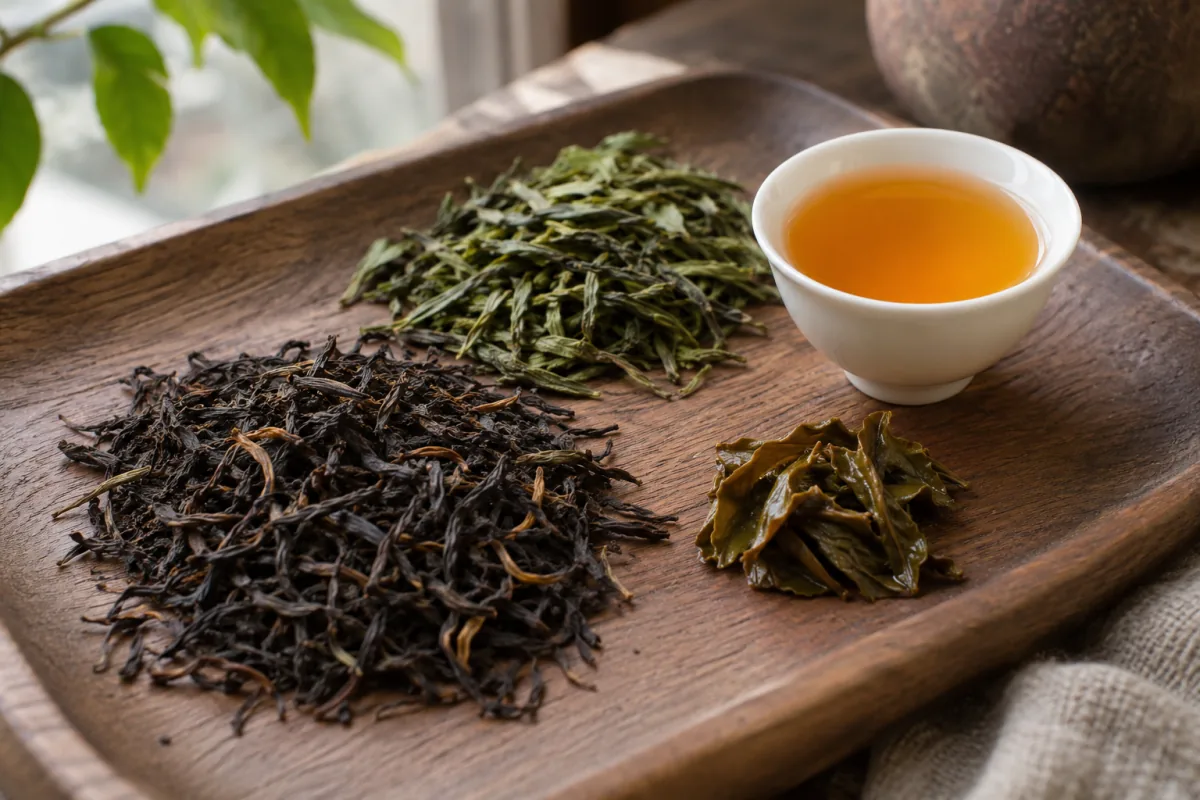
Buying loose leaf tea can be a little confusing, especially when you are not familiar with different tea types. Some packages look beautiful, some teas have a strong smell, and some cost much more than others. But how can you tell whether the tea is actually good quality?
The answer depends partly on where you buy it.
At a supermarket, you may only be able to check the packaging and label. At a specialty tea shop, you might be able to smell the dry leaves or taste a sample. When shopping online, you need to rely more on product details and the seller's information.
Here are some practical ways to check loose leaf tea before spending your money.
What Makes Loose Leaf Tea Good Quality?
There is no single appearance or price that tells you whether a tea is good. Different types of tea naturally look and smell different.
For example, green tea can have flat, twisted, or rolled leaves. Black tea may have dark brown or nearly black leaves. Some oolong teas are tightly rolled into small balls, while others have long, twisted leaves.
Instead of looking for one perfect shape or color, pay attention to a few basic things:
- Appearance: The leaves should look reasonably clean and consistent with the type of tea. Avoid tea with obvious dirt, unusual foreign materials, or signs of moisture damage.
- Smell: Fresh tea should have a clean aroma. Depending on the type, it may smell grassy, floral, fruity, roasted, or malty.
- Storage condition: Tea should be protected from moisture, strong light, heat, and outside odors.
- Taste: When brewed correctly, the tea should have a pleasant flavor that suits its type. A little bitterness or astringency does not automatically mean poor quality.
- Product information: A seller should be able to tell you what kind of tea it is and provide useful details about its origin or ingredients.
You may not be able to check all these things before buying, but the following tips can help you make a better decision at different stores.
How to Check Loose Leaf Tea at a Supermarket
Supermarkets are a convenient place to buy everyday tea. You can often find green tea, black tea, herbal blends, and other popular varieties.
The main problem is that most tea is sold in sealed packages. You usually cannot open the bag to smell the leaves or see exactly what is inside.
In this situation, start with the packaging.
Check whether the package is properly sealed.
Look for damaged seals, holes, or packaging that appears to have been opened. Tea can easily absorb moisture and odors from its surroundings, so good packaging matters.
A resealable pouch or an airtight container can help protect tea after opening, but the original package should also be in good condition.
Read the ingredients list.
If you are buying plain green tea or black tea, check whether the ingredients list contains only tea.
Flavored teas are different. They may contain dried fruit, flowers, spices, or added flavorings. There is nothing automatically wrong with these ingredients, but you should know what you are buying.
For example, a lemon-flavored green tea is not the same product as plain green tea.
Look for useful product details.
Check whether the label identifies the tea type, origin, net weight, and a best-before date.
A specific origin can tell you more about where the tea comes from. However, a country name alone does not guarantee quality.
The best-before date is also worth checking. Tea does not suddenly become unsafe just because this date has passed, but its aroma and flavor may gradually become weaker.
Don't judge by the price alone.
A more expensive package is not always better. Large brands may charge more for packaging and marketing, while some affordable teas can be perfectly enjoyable for everyday drinking.
If you are unsure, start with a small package rather than buying a large amount.
How to Judge Tea Quality at a Specialty Tea Shop
A specialty tea shop gives you more opportunities to check tea before buying. Some shops keep loose leaf tea in jars or containers, and staff may let you smell the leaves or try a brewed sample.
This is a good opportunity to use your senses instead of relying only on the label.
Look at the dry leaves.
Ask to see a small amount of tea if the shop allows it.
Notice the color, shape, and general condition. The leaves should look appropriate for that particular tea. Some teas naturally contain smaller pieces, so don't assume that every broken leaf means poor quality.
Also look for obvious signs of moisture, mold, or foreign material.
Smell the dry tea.
This is one of the easiest ways to learn about a tea before buying it.
Different teas have different natural aromas. Green tea may smell fresh or grassy, black tea can have malty or fruity notes, and oolong tea may smell floral, creamy, or roasted.
The important thing is that the aroma should be clean and pleasant for that tea.
Be careful if you notice a musty, damp, moldy, or stale smell. These are not qualities you should ignore just because the tea is expensive.
Ask the staff a few questions.
You don't need to know complicated tea terms. A few simple questions can tell you whether the shop understands the products it sells.
For example:
- Where does this tea come from?
- When was it harvested or packed?
- Is this tea naturally flavored or does it contain added flavoring?
- What does it usually taste like?
- Can I try a small sample?
A knowledgeable seller should be able to give you useful answers without making the tea sound more special than it is.
Try a sample if one is available.
If the shop offers tea samples, take the opportunity.
Notice the aroma when the tea is hot, how the flavor develops, and how it feels in your mouth. Is it pleasant to drink? Does it have the kind of flavor you expected?
Don't automatically reject a tea because it tastes slightly bitter or dry. Some green teas and black teas naturally have bitterness or astringency. Brewing temperature and steeping time can also change the taste.
How to Check Loose Leaf Tea When Buying Online
Online shopping gives you access to many more tea varieties, but there is one obvious disadvantage: you cannot smell or taste the tea before placing an order.
That means you need to pay closer attention to the product description and the seller.
Look for clear product information.
A useful product page should tell you what type of tea you are buying. It should ideally include details such as:
- Tea type, such as green tea, black tea, or oolong
- Country or region of origin
- Ingredients, especially for flavored blends
- Net weight
- Brewing instructions
- Harvest or packing information, when available
A description that only says "premium tea with an amazing taste" does not tell you much.
Check the product photos carefully.
Look for pictures showing the actual dry leaves, not just a beautiful cup of tea or an attractive package.
If the seller provides close-up photos, you may be able to see the leaf shape and general condition.
Still, remember that product photos can be edited or may not show every detail. A good-looking picture is not proof of good tea.
Read customer reviews for specific details.
Instead of looking only at the star rating, read what customers say about the tea itself.
Useful reviews may mention:
- Whether the tea smells fresh when opened
- Whether the flavor matches the description
- Whether the leaves look like the product photos
- Whether the packaging keeps the tea fresh
- Whether the tea tastes good after brewing
Be cautious about relying on reviews that only say "great product" or "fast delivery." They may tell you about the shopping experience but not much about tea quality.
Try a small package first.
If you are buying from an unfamiliar online tea seller, a small pack is usually a better choice than a large one.
You can test the aroma and taste without spending too much. If you enjoy it, you can order more later.
What Should Good Loose Leaf Tea Look and Smell Like?
After checking the store or product information, it helps to understand what you should actually look for in the tea.
The leaves don't have to be perfectly whole.
You may hear that whole leaves are always better than broken leaves. This is too simple.
Some tea types are intentionally broken or processed into smaller pieces. Other teas are known for their whole, twisted, or tightly rolled leaves.
What matters is whether the leaf appearance is appropriate for that type of tea and whether the product looks clean and well handled.
The color depends on the tea type.
Green tea is not always bright green. Depending on the variety and processing method, it can look pale green, yellow-green, or darker.
Black tea is usually darker, while oolong tea can range from greenish to brown.
An unusual color by itself is not enough to judge quality. You need to consider the tea type and its overall condition.
The smell should be clean, not musty.
Fresh tea can have many different aromas. Some teas smell like fresh grass, flowers, fruit, honey, or roasted nuts.
However, a damp basement smell, moldy odor, or unpleasant stale smell is a warning sign.
The brewed tea matters too.
If you can brew a sample, pay attention to the aroma and flavor rather than just the color of the tea liquor.
A good tea should have a flavor that makes sense for its type. It does not have to be extremely strong, sweet, or completely free of bitterness.
Does Expensive Loose Leaf Tea Always Mean Better Quality?
Not necessarily.
Some teas cost more because of their growing region, harvest season, production method, limited supply, or the amount of work involved in making them.
Packaging, branding, and retail costs can also affect the price.
A high price does not automatically mean that a tea will taste better to you. Likewise, an affordable tea is not always poor quality.
Tea grades can also be confusing. For example, some black teas use terms such as whole leaf, broken leaf, fannings, and dust. These describe leaf size or grading categories, but they do not provide a complete measure of taste or overall quality.
The best approach is to compare teas of the same general type, check the product details, and try a small amount before buying a larger package.
If you enjoy the aroma and flavor, and the tea is clean and properly handled, it may be a good choice for your everyday cup.
A Simple Checklist Before Buying Loose Leaf Tea
You don't need to become a tea expert to buy good loose leaf tea. Just remember what you can check at each store.
- Is the package sealed and in good condition?
- Is the tea type clearly identified?
- Can I find useful information about its origin and ingredients?
- Does the dry tea have a clean, pleasant smell?
- Can the seller answer basic questions about the tea?
- Do the product photos and descriptions provide enough detail?
- Can I buy a small package before committing to a larger one?
Once you find a tea you enjoy, store it properly so it keeps its aroma and flavor. See our guide on how to store loose leaf tea at home for practical ways to protect your tea after opening.