You may have seen Longjing tea on a Chinese restaurant menu, in a tea shop, or on a bag of loose leaf green tea. It may also be called Dragon Well tea. If you have never tried it, you might wonder what makes it different from the green tea you already know.
Longjing is one of China's best-known green teas. It is known for its flat, smooth leaves and a gentle flavor that can remind people of roasted chestnuts, fresh beans, or lightly toasted nuts.
But there is more to it than its unusual shape. Where it comes from, how it is made, and how you brew it all affect the cup.
What Is Longjing Tea?
Longjing (龙井), usually translated as Dragon Well, is a Chinese green tea traditionally associated with Hangzhou in Zhejiang Province.
Like other green teas, it is made from the leaves of the Camellia sinensis plant. The difference is in how the fresh leaves are processed.
After picking, the leaves are heated to stop most of the oxidation that would otherwise change them into a darker type of tea. Longjing is traditionally pan-fired in a hot wok. During this process, the leaves are pressed and shaped by hand until they become flat.
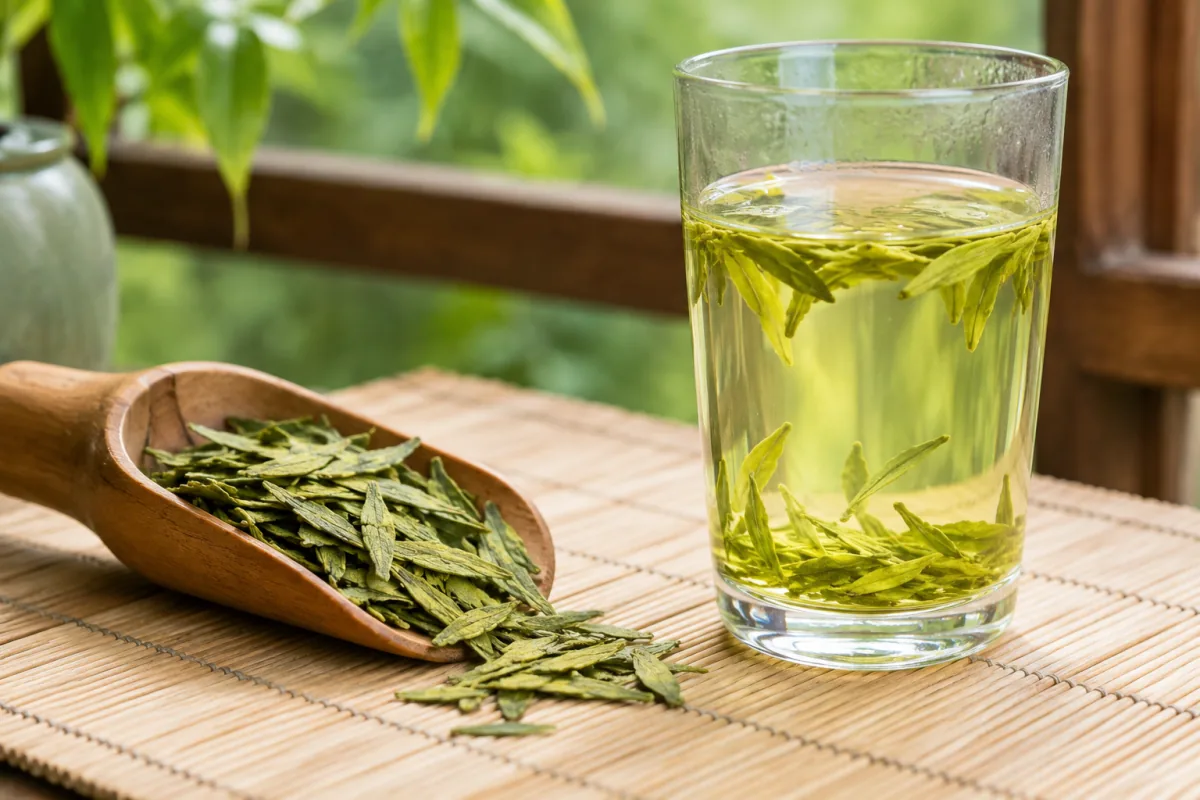
That is why Longjing does not look like many other green teas. Instead of long needles or tightly rolled leaves, you will often see flat, smooth pieces that look a little like small blades.
You may see it sold as Longjing, Long Jing, or Dragon Well. These names generally refer to the same broad style of tea, although the exact growing area can be different. Not every tea sold as Longjing comes from the famous West Lake area.
What Does Longjing Tea Taste Like?
If you usually find green tea too grassy or sharp, Longjing may be worth trying.
A well-made Longjing often has a soft, rounded flavor. Common tasting notes include:
- Roasted chestnut: A gentle nutty flavor that is one of the best-known characteristics of Longjing.
- Fresh beans: Some teas have a mild green bean or cooked pea note.
- Light sweetness: The finish can feel slightly sweet, even without adding sugar.
- Fresh, vegetal notes: Depending on the tea, you may notice fresh grass or green vegetables.
The flavor is usually not as strongly grassy as some green teas. However, not every Longjing tastes exactly the same. The growing area, harvest season, leaf material, processing, storage, and brewing method all make a difference.
A cheaper or older tea may taste flatter, while a fresh, well-made one can have a more noticeable aroma and a smoother finish.
Why Do Longjing Tea Leaves Look Flat?
If you open a bag of Longjing for the first time, the flat leaves may look unusual.
They do not grow naturally in that shape. The appearance comes from the way the tea is processed.
After the leaves are picked, they are heated in a wok. The tea maker uses repeated hand movements to press, move, and shape the leaves while they dry. This gives Longjing its familiar flat appearance.
The process also helps create its roasted aroma and flavor.
This is why you should not judge Longjing only by whether the leaves are perfectly flat or look exactly like a product photo. Different batches and grades can have slightly different shapes and sizes.
Is Longjing the Same as West Lake Longjing?
Not always. This is an important difference to understand if you are buying Chinese green tea.
Longjing is the broader tea name. It can refer to tea produced in several recognized Longjing-growing areas in Zhejiang.
West Lake Longjing, also called Xihu Longjing, refers to Longjing produced within the designated West Lake area of Hangzhou.
West Lake Longjing is particularly famous, and its name is closely connected with a specific growing region. This is one reason it can cost more than Longjing from other areas.
If a tea package simply says "Longjing Green Tea," you should not automatically assume it is West Lake Longjing.
If you see a package labeled "West Lake Longjing" or "Xihu Longjing," check whether the seller provides clear information about its origin. We explain the difference, including what to look for on a tea label, in our guide to West Lake Longjing vs. regular Longjing.
What Should You Look for When Buying Longjing Tea?
Imagine you are browsing a tea shop and see three bags labeled Longjing. One is inexpensive, another says West Lake Longjing, and the third uses words such as premium or early spring.
Which one should you choose?
Start by checking the basic product information rather than the marketing words.
Check the origin.
Does the label name Hangzhou, Zhejiang, or a more specific growing area? If it claims to be West Lake Longjing, does the seller explain where it comes from?
A specific origin is more useful than a general claim such as "famous Chinese green tea."
Check the harvest or packing information.
Longjing is a seasonal green tea, and freshness matters. If the seller provides a harvest year or packing date, that information can help you understand how recently the tea was produced or packed.
A recent packing date does not necessarily mean the tea was harvested recently, so check the wording carefully.
Look at the dry leaves.
Longjing usually has flat, pressed leaves. They should look reasonably clean and free from obvious foreign material or signs of moisture damage.
However, appearance alone cannot prove the tea's origin or grade.
Smell the tea if you can.
If you are shopping in person, ask whether you can smell a small sample. A pleasant Longjing aroma may be nutty, fresh, or lightly roasted.
A damp, musty, or stale smell is a reason to be cautious.
Buy a small amount first.
If you have not tried Longjing before, there is little reason to start with an expensive large package. A small pack lets you find out whether you enjoy its flavor before spending more.
How Do You Brew Longjing Tea at Home?
You do not need special equipment to enjoy Longjing. A glass cup, a small teapot, or a simple tea infuser can work.
For a first try, use these starting points:
- Tea: About 2–3 grams for a 200 ml cup
- Water temperature: Around 75–85°C (167–185°F)
- Steeping time: Start with about 1–2 minutes
- Water: Use fresh water with a clean taste
These are starting suggestions, not strict rules. A particular Longjing may need slightly different conditions.
If the tea tastes too bitter or strong, try cooler water, fewer leaves, or a shorter steep. If it tastes too weak, you can add a little more tea or steep it slightly longer.
Many people also enjoy brewing Longjing directly in a tall glass. Add the leaves, pour in the water, and watch them slowly open and move through the cup. It is a simple way to enjoy the appearance of the tea as well as its flavor.
If you often find green tea too bitter, our guide on the best water temperature for green tea can help you adjust your brewing method.
Is Longjing Tea Worth Trying?
Longjing is a good option if you enjoy green tea but want something with a softer, more rounded flavor.
Its roasted, nutty character makes it different from green teas that taste strongly grassy or vegetal. It is also easy to brew with everyday teaware, so you do not need to learn a complicated tea ceremony to enjoy it.
You do not have to buy the most expensive West Lake version to find out whether you like Longjing. Start with a small package from a seller who provides clear product information.
Once you understand its flavor, you can decide whether you want to explore different Longjing growing areas or try a more specific West Lake version.